
Non-standard hardware loads
That distance matters less for the drive itself and more for what we load before we leave - if your door's a Bartlett door, it's probably not the same animal as the ones we see closer to home.
Bartlett, Wheaton
Bartlett homes mostly went up in the 90s, not the 70s like the rest of the service area. That changes what breaks and what parts we bring on the truck from Wheaton.
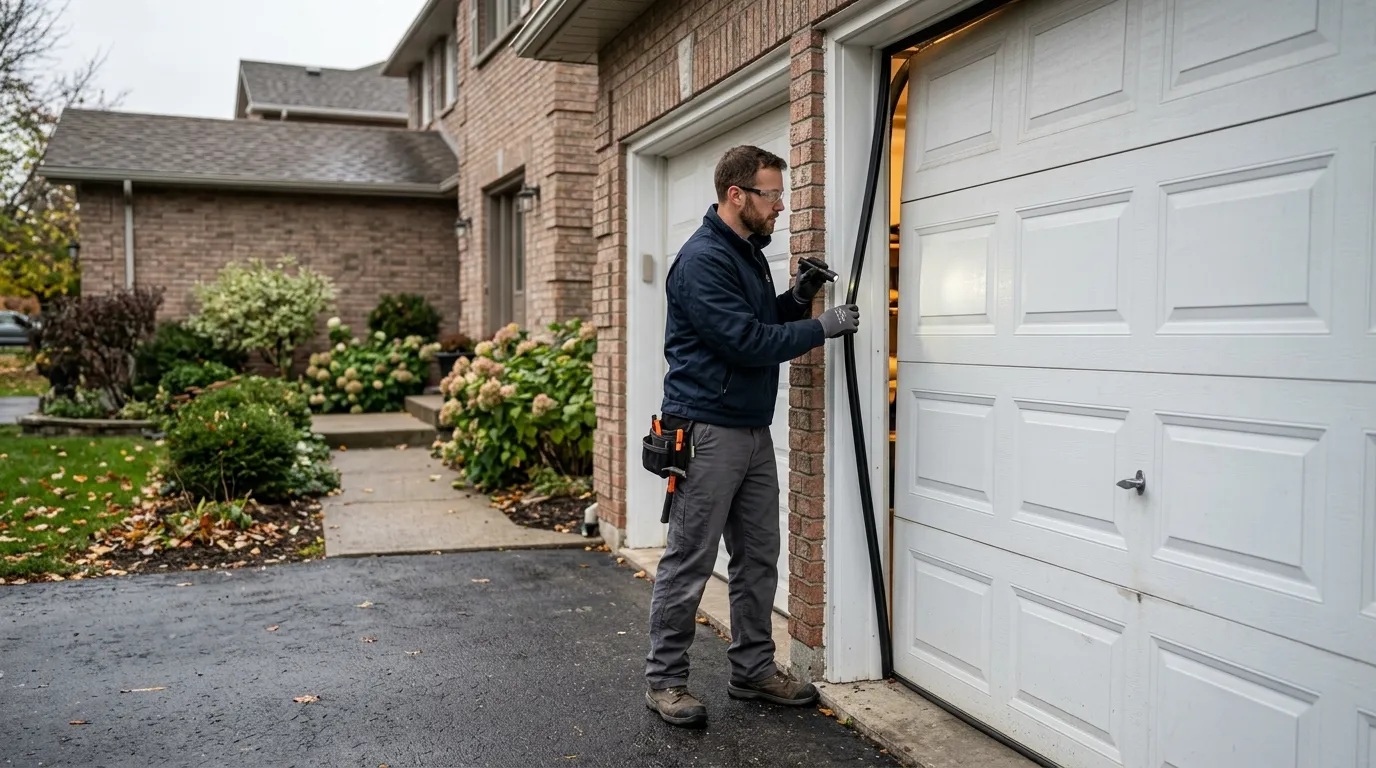
Watch-outs
Bartlett sits about eight miles out from our shop in Wheaton, which puts it on the far edge of what we cover in a single trip.
That distance matters less for the drive itself and more for what we load before we leave - if your door's a Bartlett door, it's probably not the same animal as the ones we see closer to home.
Most of the housing on this side of the service area went up between 1938 and 2003, with the middle of that range landing around 1976. Bartlett skews well past that midpoint - its homes cluster closer to the early 1990s. That's a real gap.
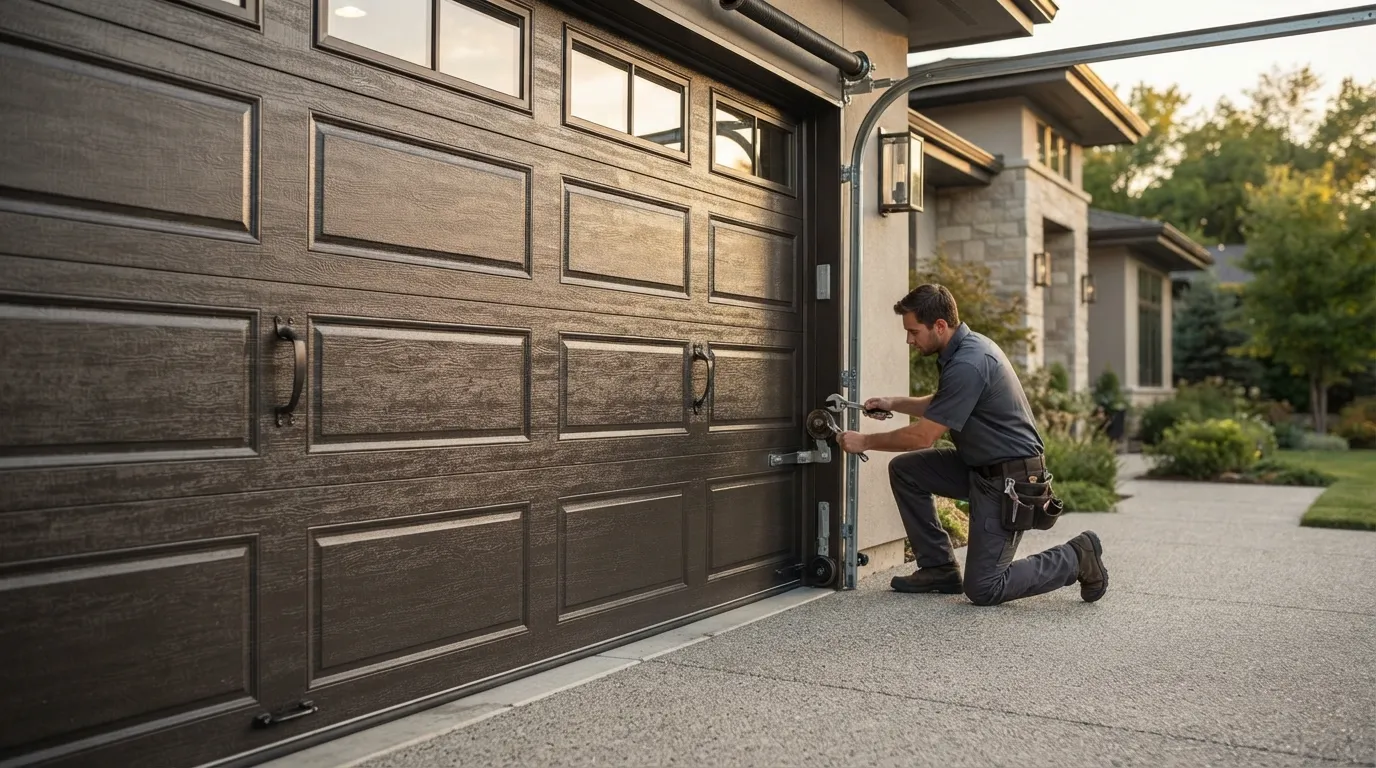
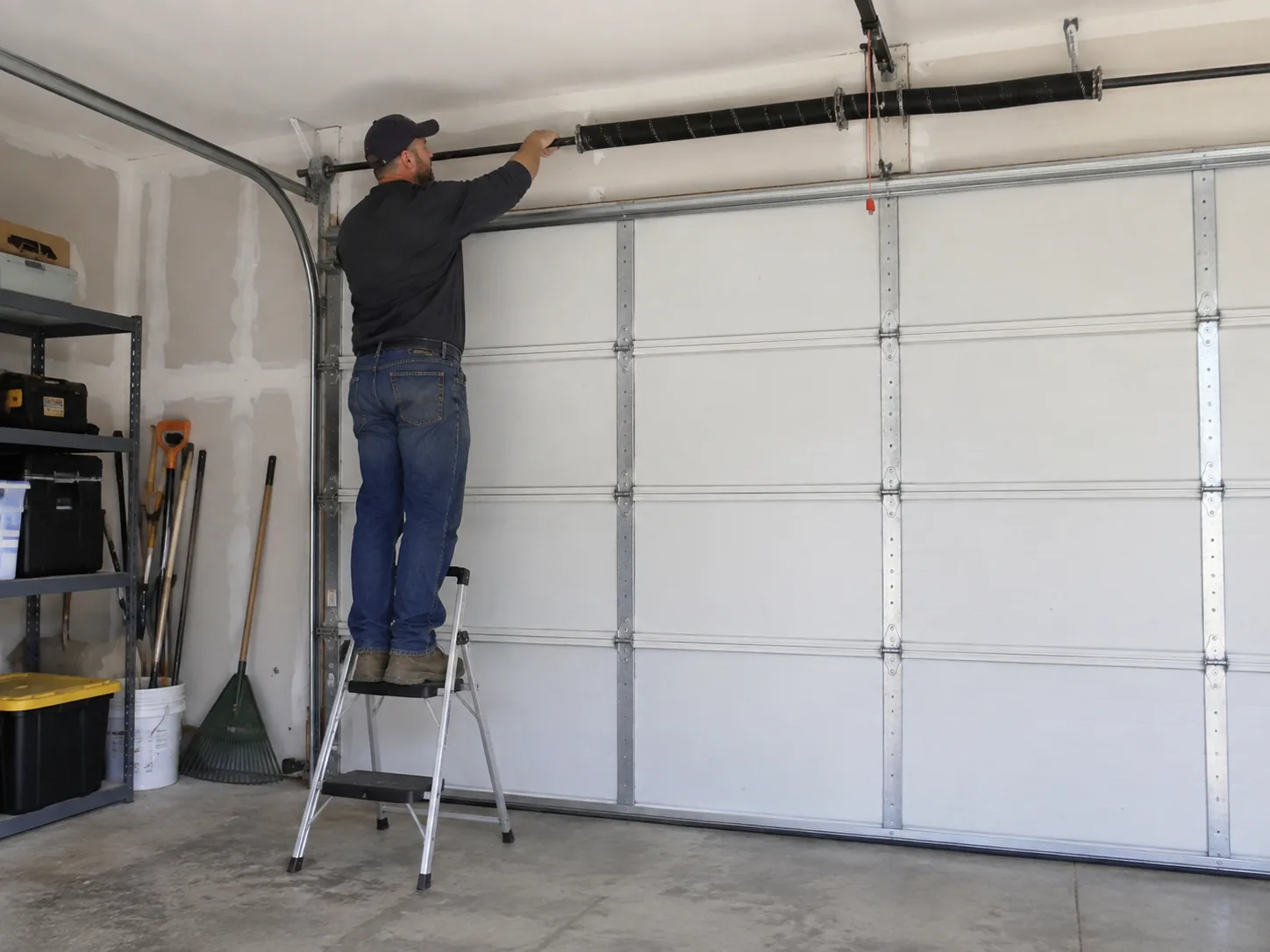
A door installed in 1976 usually runs on older extension spring hardware bolted straight to the horizontal track, no safety cables, sometimes no auto-reverse sensors at all. A door from the early 90s is more likely to have torsion springs on a center bracket and a factory-installed opener with photo-eye sensors, since those became standard around then.
So when we get a Bartlett call, the failure is usually a torsion spring that's cycled out, a worn opener drive gear from a unit that's been running twenty-plus years, or photo-eye sensors that have drifted out of alignment. We don't show up guessing which era of hardware we're dealing with - we ask on the phone first, because loading the truck for the wrong decade means a second trip.
Booking
Because we're coming from Wheaton, the phone call does more work here than it would for a job five minutes from the shop. Tell us the age of the house if you know it, whether the door is one solid panel or sectional, and whether the opener is original to the house or a replacement. That's usually enough for us to know if we're bringing torsion spring stock sized for a 1990s door or older extension-spring parts.
We don't run a branch or drop-off counter in Bartlett - every job here is a dispatched trip from Wheaton, so the more we know before the truck leaves, the less time you spend waiting on a second visit for a part we didn't guess right the first time. If the door won't move at all, say so up front; a dead door with someone trapped or unable to get a car out changes the order we work jobs in that day.
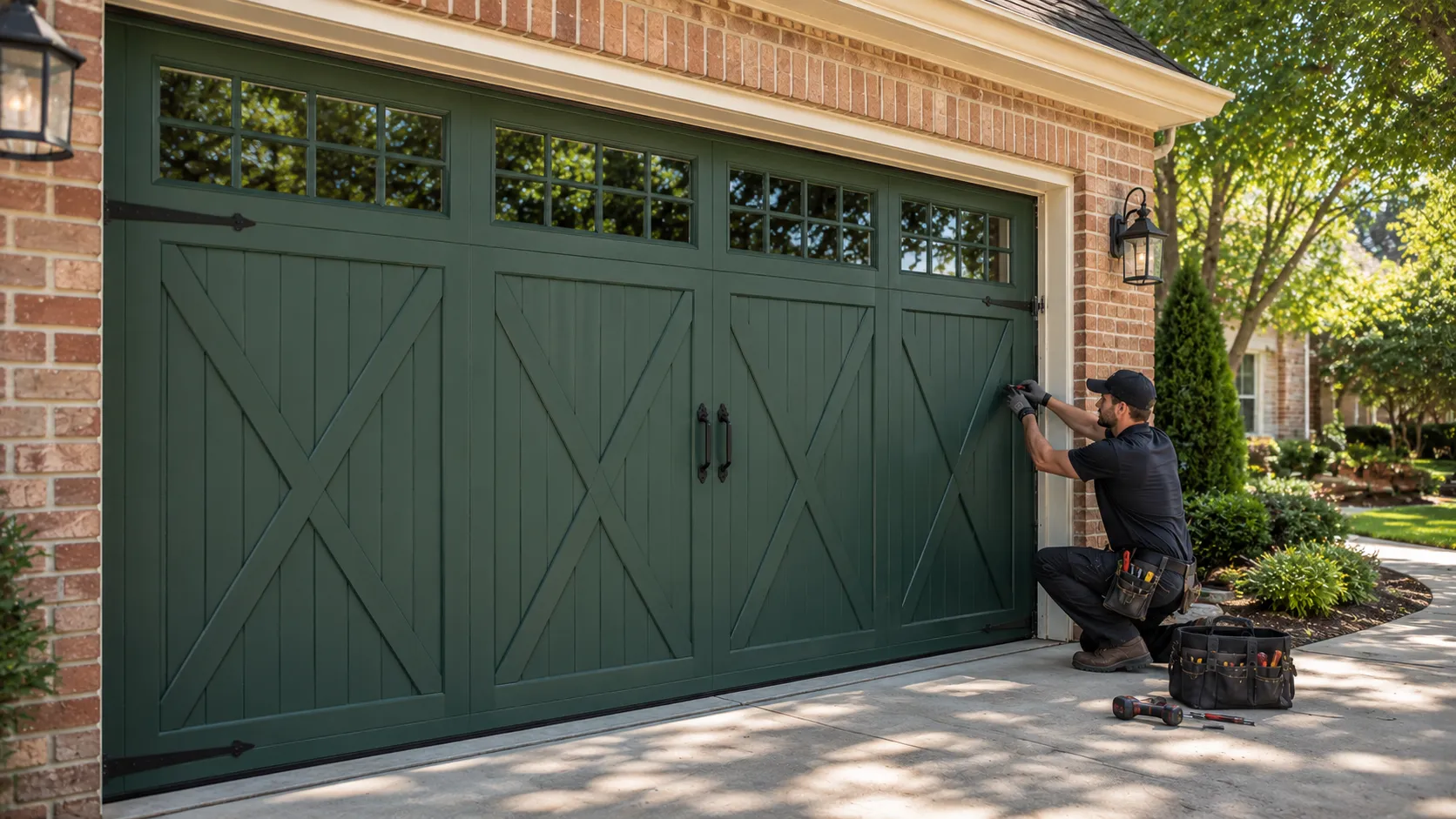
DIY or pro
A few things on a Bartlett-era door are safe to check yourself before you call anyone. Look at the photo-eye sensors near the bottom of each track - if they're knocked out of alignment or one has a blinking light, that alone can stop the door from closing, and straightening them costs nothing.
Check that the opener's travel limits haven't drifted, which shows up as the door reversing a few inches from the floor. What you should not touch: the torsion spring itself, or the center bracket it's mounted to.
On a door built to early-90s spec that spring is wound to lift a heavier, better-insulated panel than the older doors nearby, and it's storing enough force to break a bone or worse if the winding bars slip.
That's not a scare line, it's just the honest limit - we don't recommend spring work as a homeowner project on any door, and we won't walk someone through it over the phone.
Pricing
We don't post flat prices because spring size, opener age, and panel material all move the number, and guessing low on the website only to charge more on site isn't how we want to run this. What we can tell you is that household income across our service area runs a median of $97,861, and Bartlett runs meaningfully above that - which is one reason we see more owners here opting for full opener replacement instead of patching a twenty-year-old unit when the drive gear goes.
That's a real choice point on a lot of these calls: repairing a tired opener versus replacing it outright. We'll give you both numbers on site once we've actually looked at the unit, not before.
Questions
We run out of Wheaton and dispatch to Bartlett and the other towns nearby, about eight miles in this case. We don't keep a second branch here, so every visit is a scheduled trip from the shop rather than a walk-in counter.
Often, yes. Housing across our service area runs from 1938 to 2003 with a median around 1976, but Bartlett's stock skews newer, closer to the early 1990s. That usually means torsion spring hardware and factory photo-eye sensors rather than the older extension-spring setups on 1970s doors.
No. A torsion spring on a door this size stores enough force to cause a serious injury if it slips while you're winding or unwinding it. This is one job we don't walk homeowners through over the phone, regardless of how simple it looks online.
Explore more
Ready when you are
Wheaton Garage Door Pros repairs and installs garage doors, springs and openers in Wheaton, IL and the surrounding area.