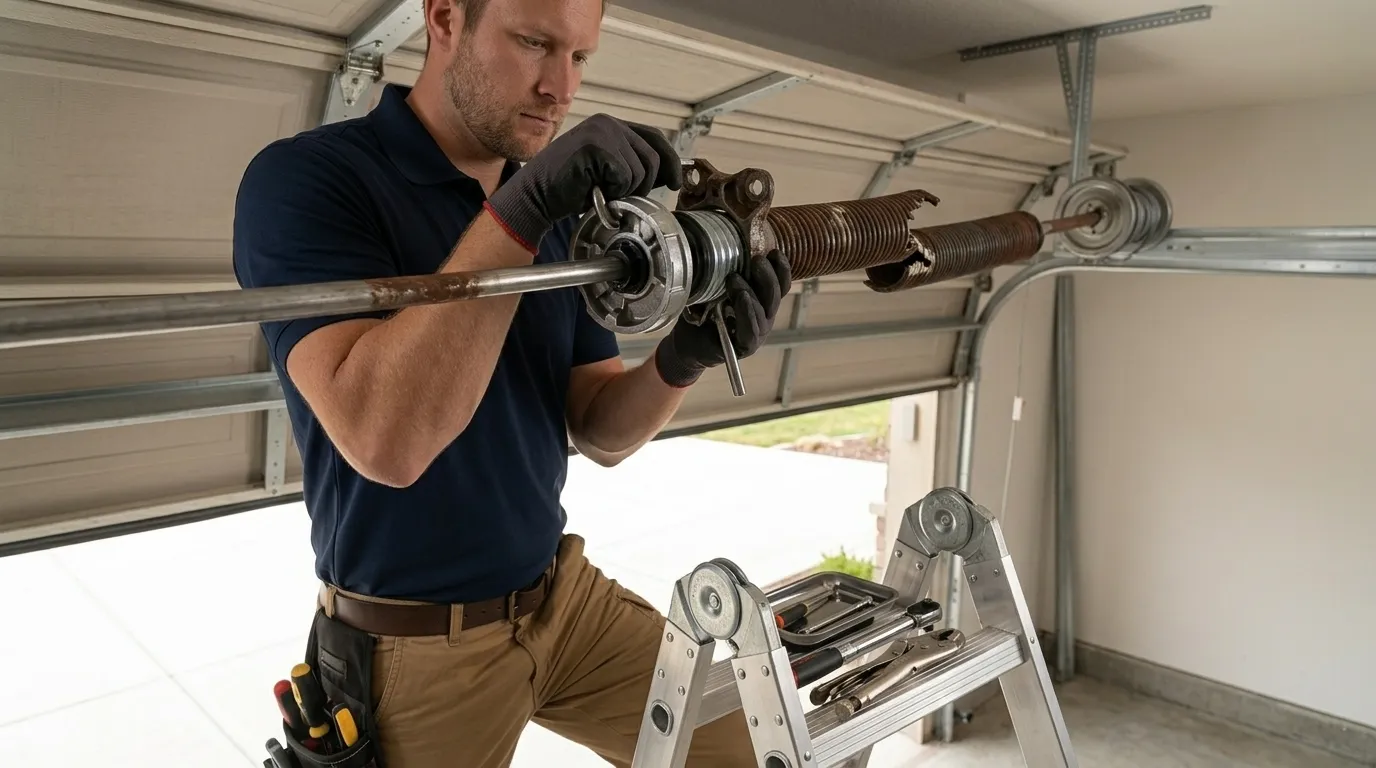
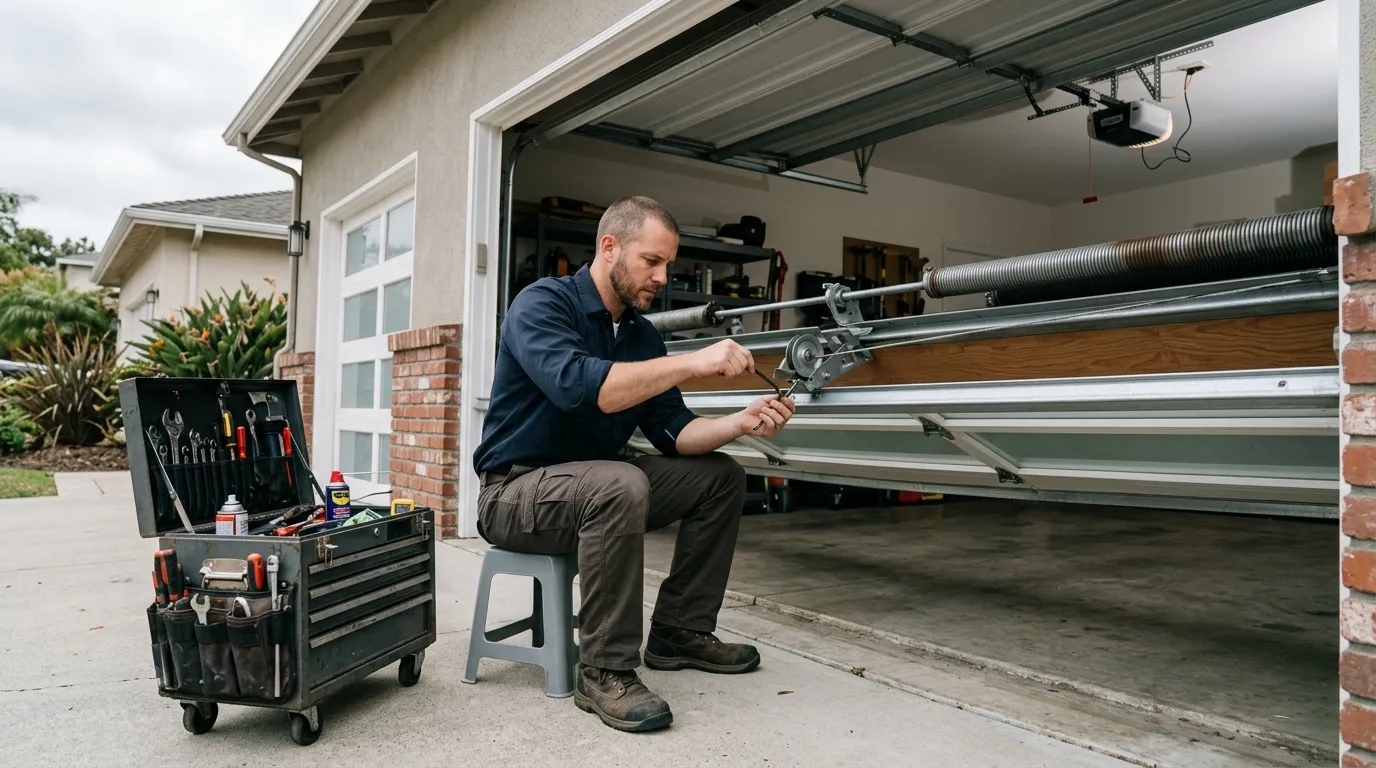
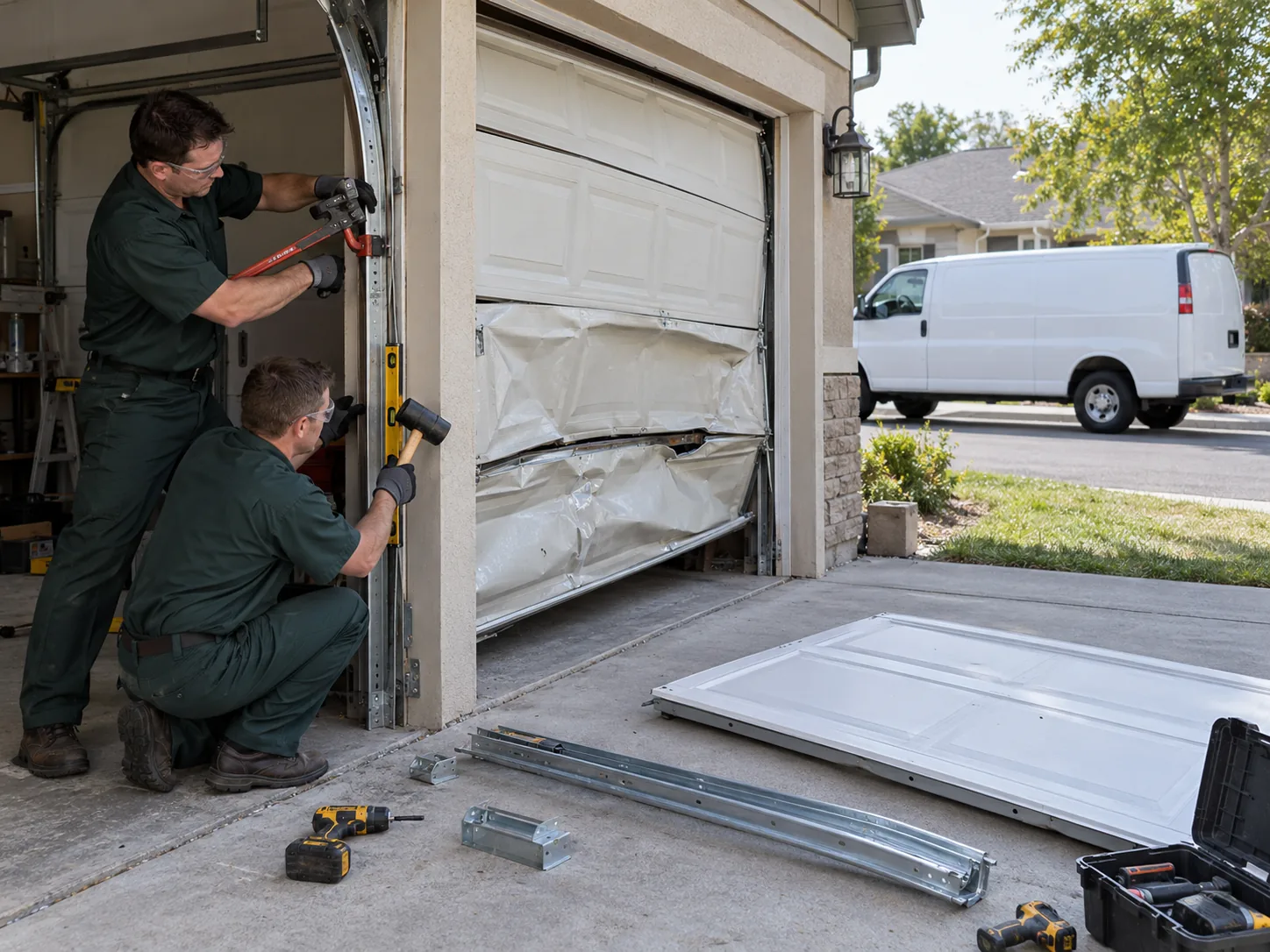
This area sits in a cold-moderate climate band, and that matters more for springs than people expect - steel fatigues faster through repeated freeze-thaw cycles than it does in a mild climate, and a spring rated for, say, 10,000 cycles doesn't care whether those cycles happened in five years or fifteen. Add in housing stock that runs from 1938 up to 2003, with the heaviest concentration built in the 1960s and '70s, and you get a lot of springs that are original or close to it, wound for doors and openers that have since been upgraded to heavier insulated panels. A heavier door on an old spring means the spring is working past its rated load every single time the door opens, which shortens its life further. Across the roughly 542,515 households in this broader area, with about 263,398 of them in owner-occupied houses, a large share of garages are carrying springs that were sized decades ago for lighter doors and haven't been touched since - which is exactly the setup that ends with a snapped coil on a cold morning.