Wheaton, IL

Garage Door Roller Replacement for Wheaton Homes

Worn or seized rollers on an older Wheaton-area garage door strain the opener and jump the track. We replace rollers on doors built anywhere from the 1930s through the early 2000s.

Garage Door Roller Replacement for Wheaton Homes in Wheaton
What we do
  • Garage Door Repair
  • New Door Installation
  • Springs & Openers
Serving Wheaton, ILBackground-checked techsHonest, upfront pricingFast local response
Local
Crews that work this area daily
Same-day
Response for most repair calls
Upfront
Pricing agreed before we start
Insured
Background-checked technicians

Symptoms

The Symptom

You notice it before you can name it. The door jerks instead of gliding, there's a grinding or squealing sound partway up the track, or the door hangs up at the same spot every single time.

Uneven ride path

Sometimes a panel visibly wobbles as it travels, like it's riding on something uneven instead of rolling smooth. That's usually a roller problem, not a spring or opener problem, though the three get blamed on each other constantly. Steel rollers on nylon stems wear at the roller face first - you'll see flat spots or chipped edges if you look closely with the door open.

Bearing drag onset

Plain steel rollers (no nylon jacket) wear at the bearing and start rattling instead of turning quietly. Either way, the roller stops rolling and starts dragging, which is what makes the noise and the jerk. A lot of homeowners live with this for months because the door still opens.

Seize point gear risk

It does, right up until a roller seizes mid-track or shears off its stem and the door binds hard enough to strain the opener's drive gear or bend the track. Catching it as a roller job, before it becomes a track-and-opener job, is the whole point of dealing with it early.

Our process

How We Fix It

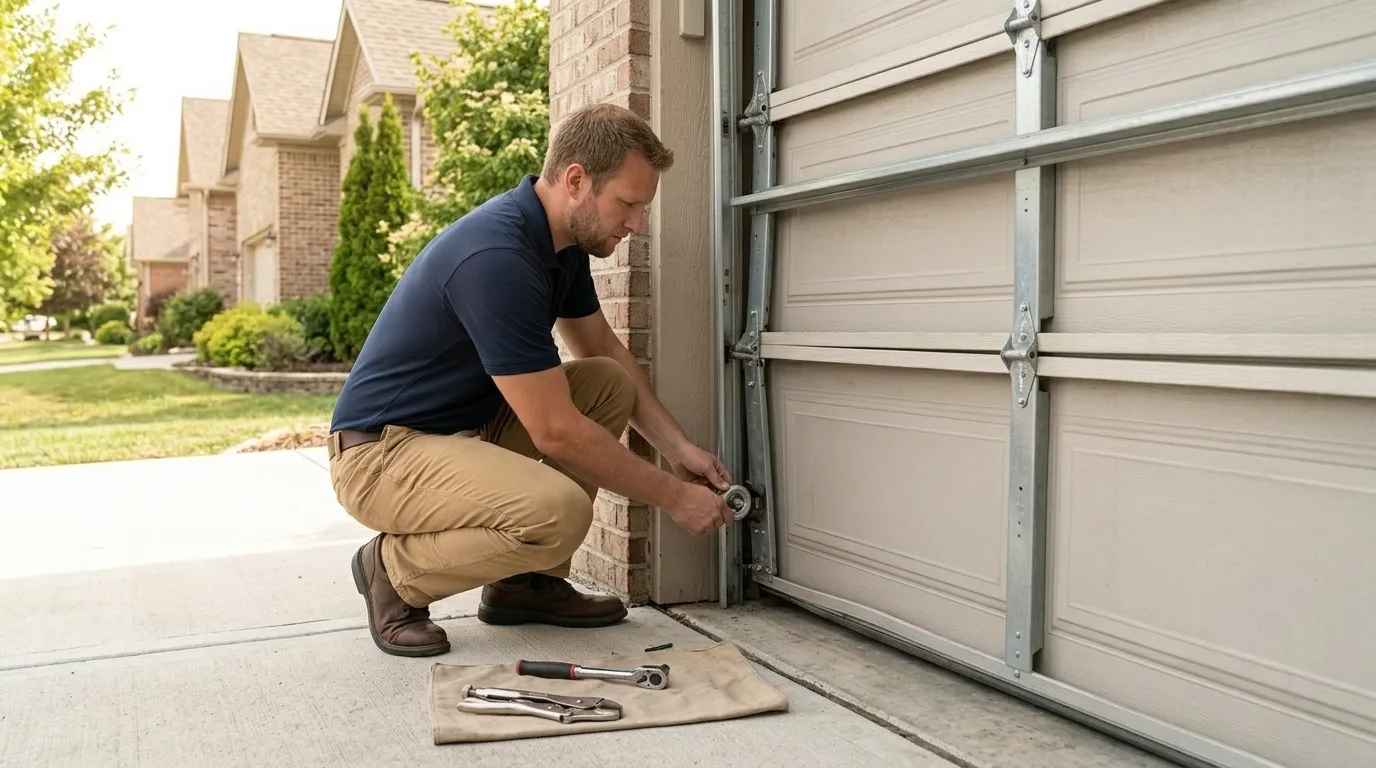
We open the door, run it by hand with the opener disconnected, and watch each roller travel through the track. Any roller that's flat-spotted, cracked, or loose in its bracket gets pulled.

  1. Matched age replacement set

    On most jobs we replace the full set rather than one or two - rollers wear at close to the same rate since they carry the same door, so mismatched ages just mean a callback in a year.

  2. Track bend recheck necessity

    We check the track alignment at the same time, because a roller can look fine and still bind if the track's bent or the brackets have worked loose from years of vibration. Replacing rollers into a track that's out of alignment doesn't fix the noise, it just delays it. What we don't do: sell you a full track-and-opener replacement when the rollers and a bracket adjustment solve it.

  3. Roller-only job viability

    If the door's structurally sound and the springs are within their service life, a roller job on its own is a couple-hour fix, not a reason to replace the whole system. We'll tell you straight if we find something bigger once the door's open - a cracked hinge, a spring near the end of its cycle count - rather than quoting one thing and finding another mid-job.

Watch-outs

Where This Job Goes Sideways

The complication isn't the roller - it's what the roller's been quietly loading for years. On a door with a bent track, new rollers ride the bend and wear again within months; the track has to be reset or swapped first, and that's a bigger job than the roller swap itself.

Decade-old bracket fit

On older doors, factory roller stems and brackets weren't sized to match today's replacement parts exactly. A door built decades ago with an original bracket sometimes needs a bracket swap alongside the roller, not just a roller dropped into the old hardware.

In-place bracket verification

We won't know which until the door's open. The other place this goes sideways: torsion springs. A door with rollers this worn has usually been running rough for a while, and rough running shortens spring life too.

Spring life overlap problem

We check spring condition on every roller call, because replacing rollers on a door whose springs are about to go just means we're back in two months for a second visit. It's rare that a roller job stays a roller job on a door with heavy wear elsewhere, and we'd rather tell you that upfront than surprise you with it.

Local causes

Why It Happens Here

Housing across this service area - Wheaton and the towns around it - was mostly built between 1938 and 2003, with the bulk of it going up in the 1960s and '70s. That's a long run of garage doors installed on original or early-replacement hardware, much of it steel rollers on stamped-steel track from an era before nylon rollers were standard. Those rollers have had forty, fifty, sixty years of cycles to wear down.

Cold-climate winters compound it. Steel rollers and steel track both contract in cold weather, which tightens clearances and makes a worn roller bind harder than it would in a mild climate - that grinding sound often gets worse the first cold snap of the year, not gradually. Grease also thickens in the cold, so a roller that's marginal in October can seize by January.

If you're closer to Glen Ellyn or Winfield than to central Wheaton, or out toward Carol Stream or Lisle, the housing stock and the climate exposure are close to the same - this is an area-wide pattern tied to when these neighborhoods were built, not a single-street issue. We cover roller replacement across the whole service area, not just one town.

Why It Happens Here

Questions

Common questions

How do I know if it's the rollers and not the springs?

Rollers usually cause noise and jerking while the door is moving smoothly other than that - grinding at a specific spot in the track, or a visible wobble. Spring problems tend to show up as the door being heavy, uneven, or not staying open. If you're not sure, we check both when we're there.

Can I just replace one or two rollers instead of the whole set?

You can, but rollers on the same door usually wear at a similar rate since they're carrying the same weight and cycles. Replacing just the worst ones often means the rest fail within a year and you're paying for a second visit. Most of our roller jobs replace the full set for that reason.

Does cold weather really make roller problems worse?

Yes. Steel rollers and track both tighten up in the cold, and grease thickens too, so a roller that's marginal in fall can seize or grind hard once temperatures drop. It's common for roller noise to get noticeably worse with the first real cold snap rather than building up gradually.

Will you tell me if the track needs work too?

Yes - we check track alignment on every roller call, since new rollers riding in a bent track just wear out again fast. If the track needs resetting or the brackets are loose, we'll say so before doing the roller swap, not after.

Ready when you are

Need a garage door sorted in Wheaton?

Wheaton Garage Door Pros repairs and installs garage doors, springs and openers in Wheaton, IL and the surrounding area.

Call NowGet a quote