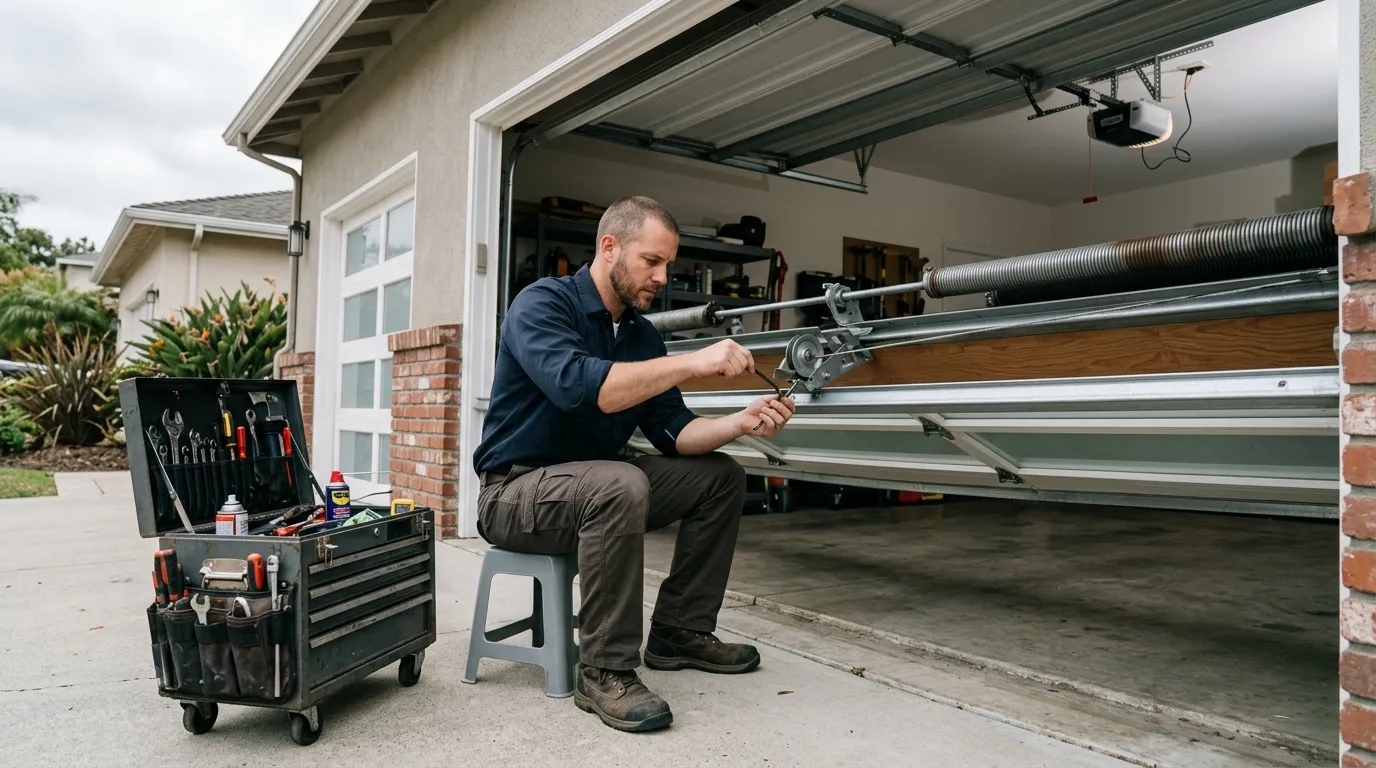
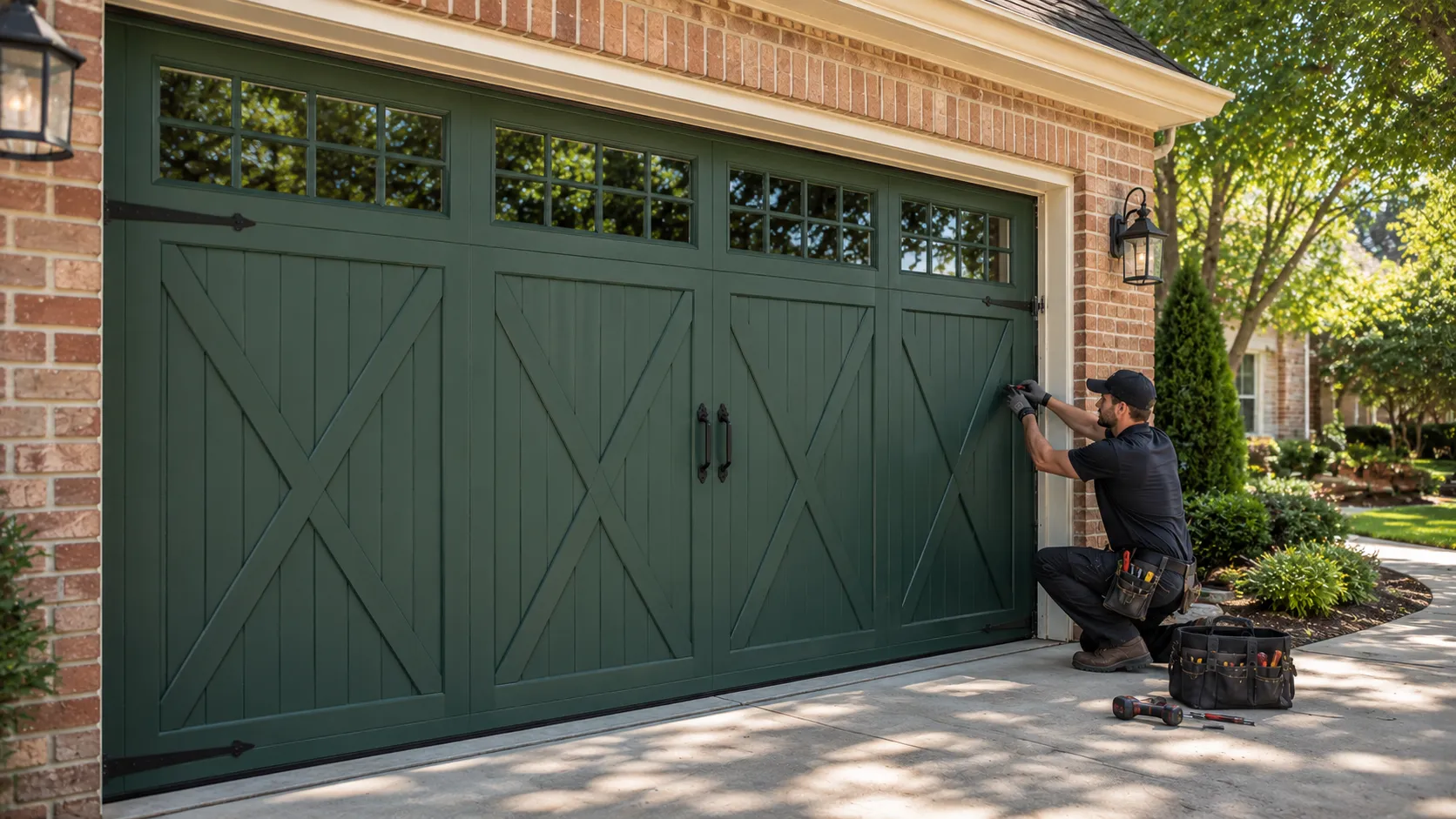
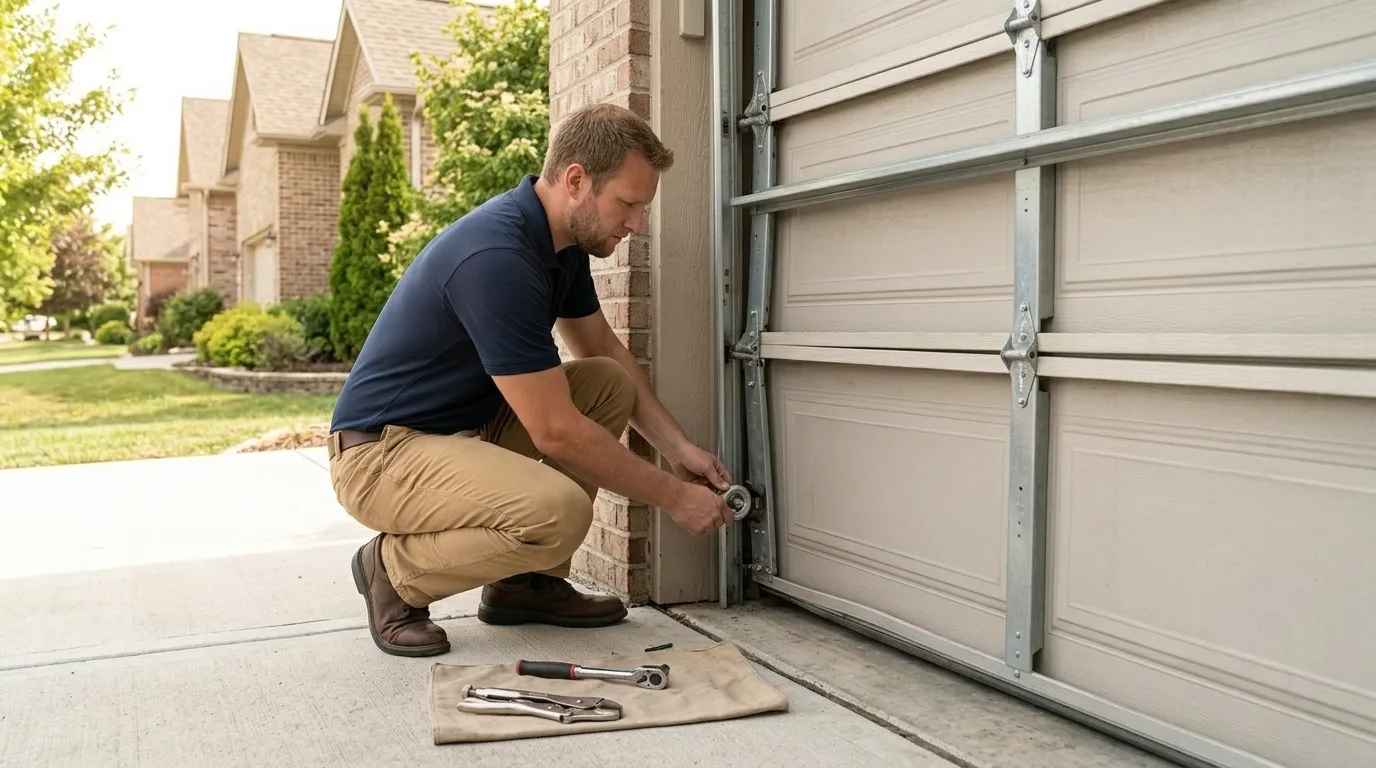
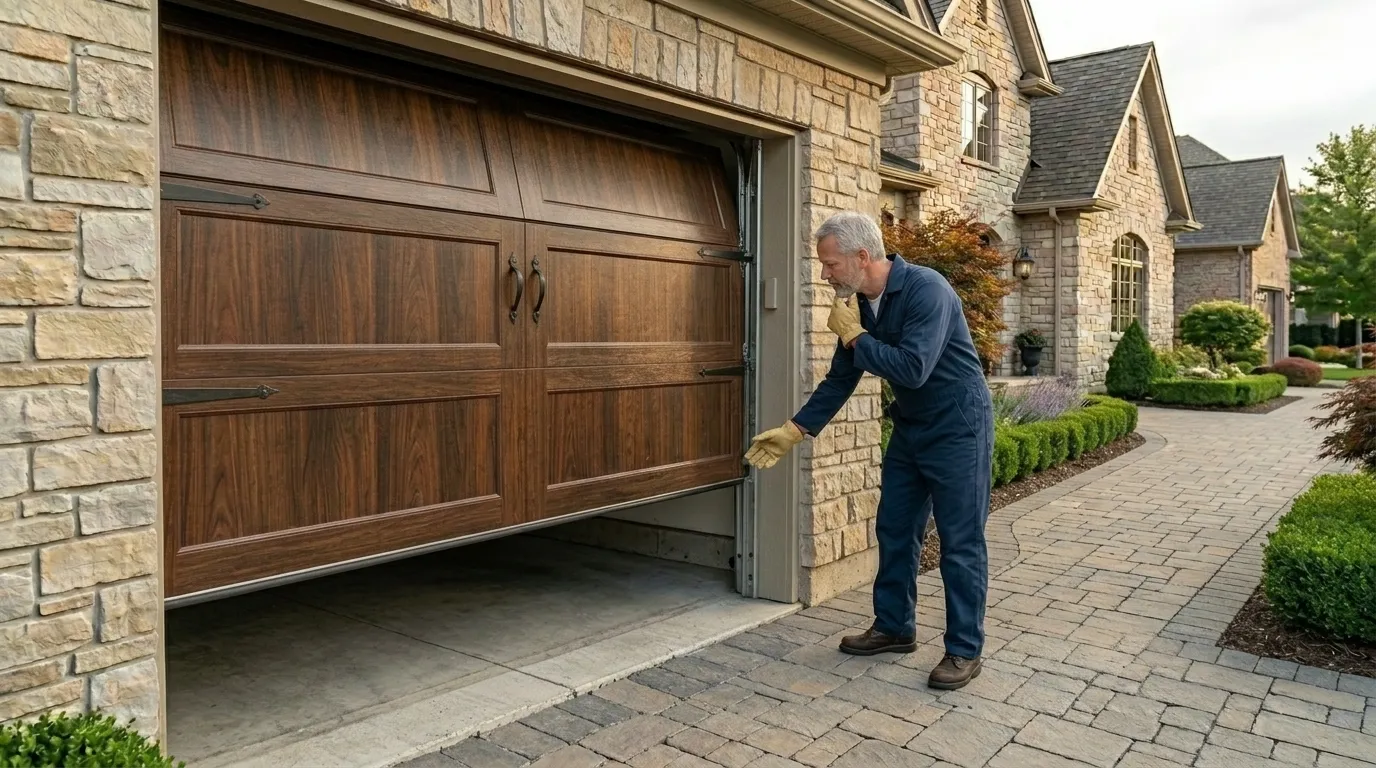
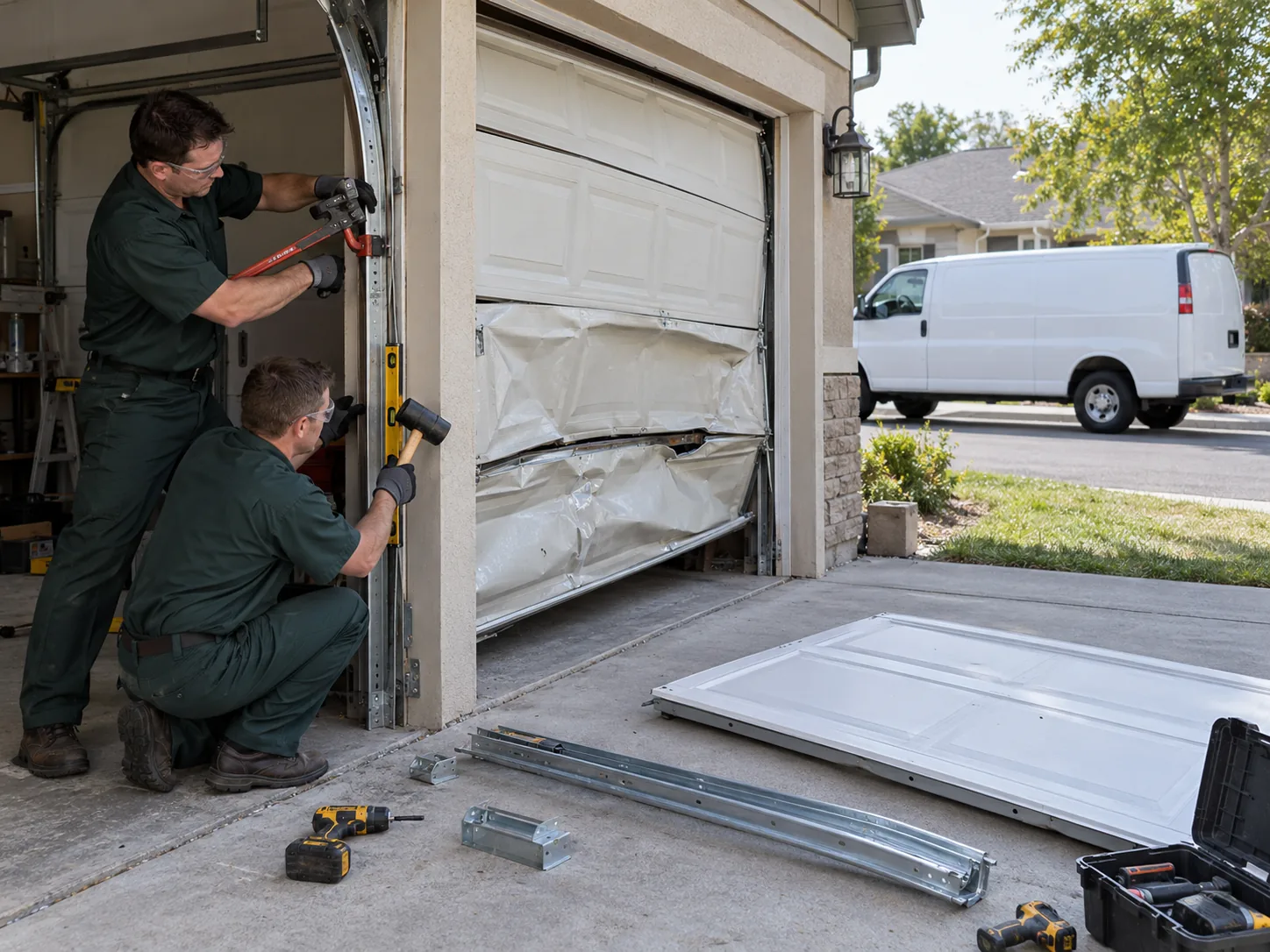
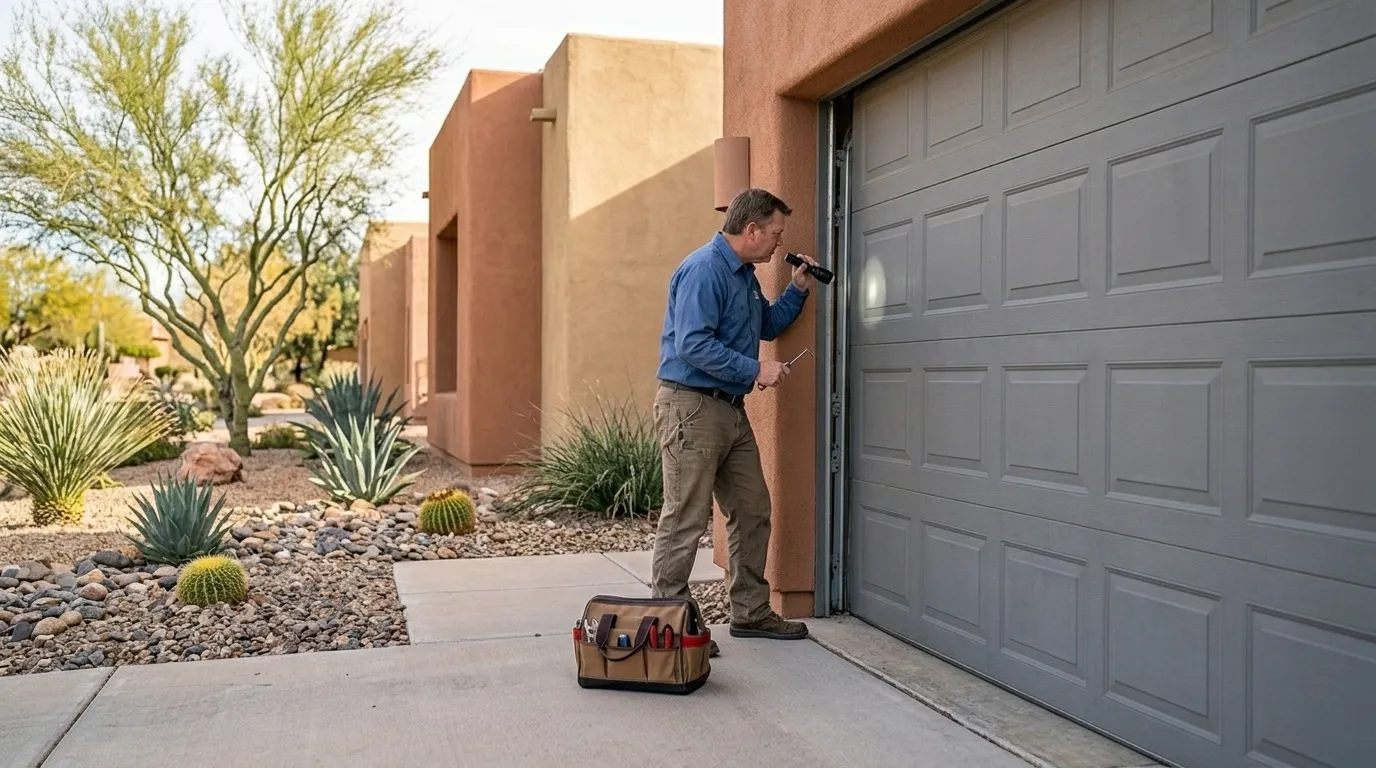
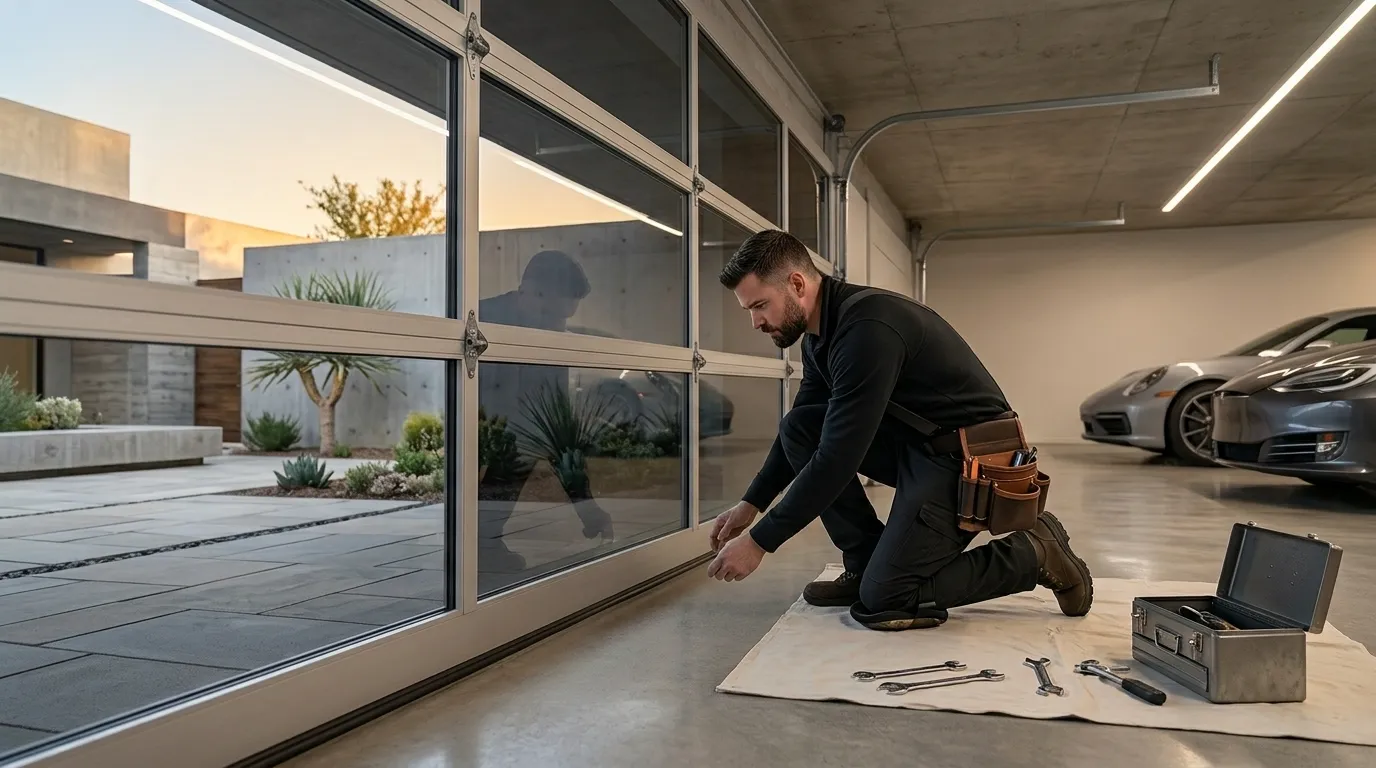
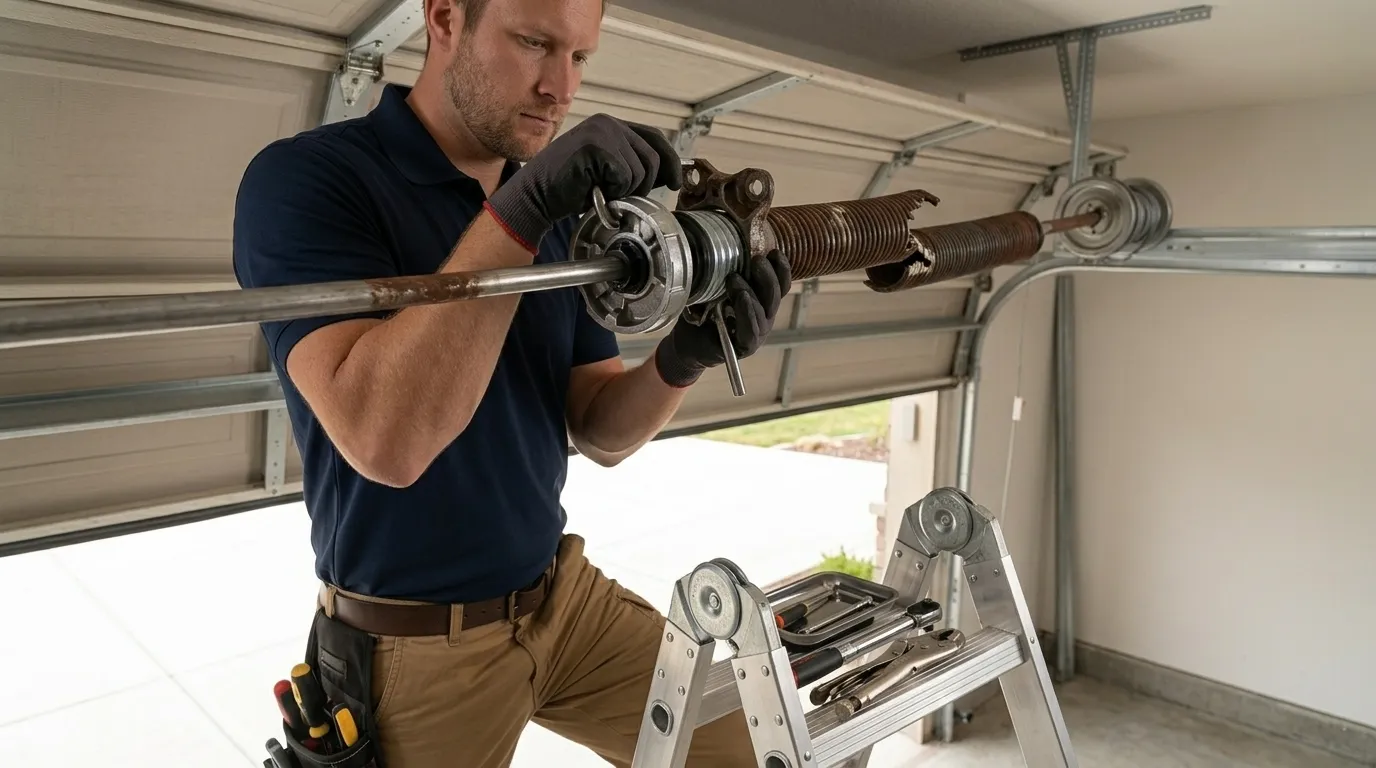
A lot of the housing in this area went up between the late 1930s and early 2000s, with most of it dating to the 1960s and '70s - and that generation of garage doors leaned on lighter steel tracks and roller hardware than what's standard today. Decades of use loosens the wall brackets holding those tracks, and a door running on worn original hardware only needs one hard stop or one gust to jump the rail.
Cold winters make it worse. In this climate band, tracks and rollers contract in freezing temperatures, and grease that's gone stiff or dried out adds friction right where the door needs to glide smoothest. A door that's already borderline aligned will pick a cold morning to finally jump track, because the metal's tightest and the rollers are dragging hardest exactly then. Add a driveway with a slope or a slab that's settled slightly over 50-plus years, and the track alignment that was fine when the house was new is off by enough to matter now. None of that means the door's ruined - it means the hardware's due, and catching it before a full derail is cheaper than after.