
Flattened Roller Track Bending
A steel roller with a flattened edge doesn't ride smooth - it walks sideways a little on every pass, and over enough cycles that walking bends the track lip or opens up the gap where the roller sits.
Homer Glen, Wheaton
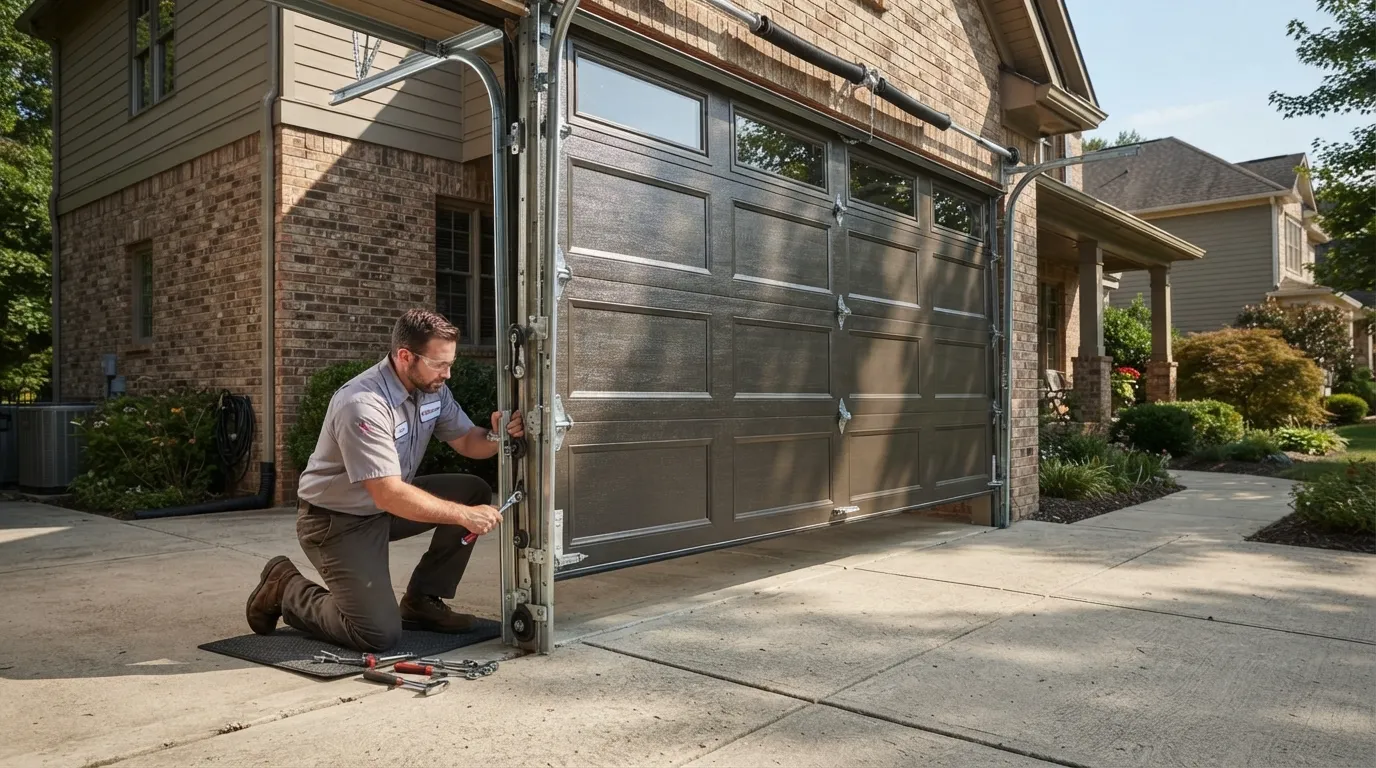
Homer Glen homes mostly went up around 1988, so builder-grade steel rollers are hitting 35+ years of wear. We drive out from Wheaton to swap them for sealed nylon.
Booking
Homer Glen is a small town by household count - about 8,001 homes total - and we don't run a branch or a truck stationed there.
We work it as a scheduled trip out of Wheaton, roughly 19 miles each way. That means we're not the crew you call for a same-hour emergency; we're the crew you call when you want the job done right and you can give us a day or a window to get there.
Because the town is small, we're not driving past three jobs on the way - we're usually making the trip for you specifically, so we ask a few questions on the phone first: how the door sounds, whether it's binding on one side, whether the rollers are metal or plastic.
That lets us load the right rollers before we leave rather than guess once we're on site. If your door is jumping track or grinding on the way up, tell us that up front - it changes what else we bring.
Local causes
Most of the housing stock in Homer Glen dates to around 1988, which puts it well past the 1938-2003 range that spans the wider Wheaton service area and squarely in the era of standard builder-grade doors - steel rollers on steel stems, no sealed bearing, no nylon coating. Those rollers were fine for the first fifteen years. At 35+ years old they're not. The steel wears a flat spot where it rides the track, and that flat spot is what you hear as a rhythmic thump every time the door moves. The region sits in a cold-moderate climate band, and that swing between summer humidity and winter cold is hard on old steel rollers specifically - they don't flex, so the bearing surface just wears unevenly instead of absorbing the temperature change. Newer builds elsewhere in the service area sometimes already have nylon rollers from a prior owner upgrade, but a straight 1988 build with its original door almost never does. That's the pattern we plan around before we even see the door.
Watch-outs
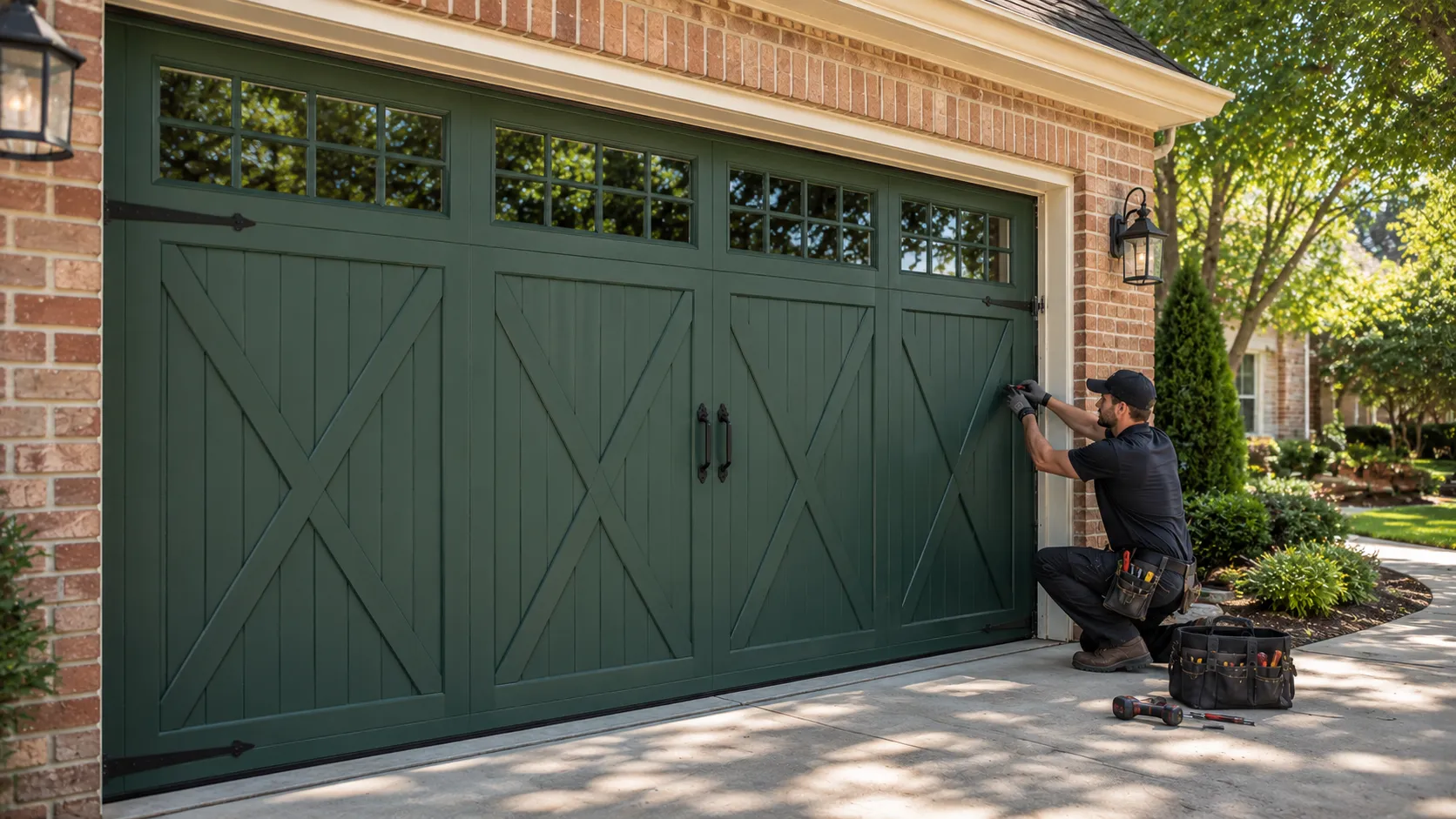
The failure that turns a roller swap into a longer job is what the worn roller has already done to the track.
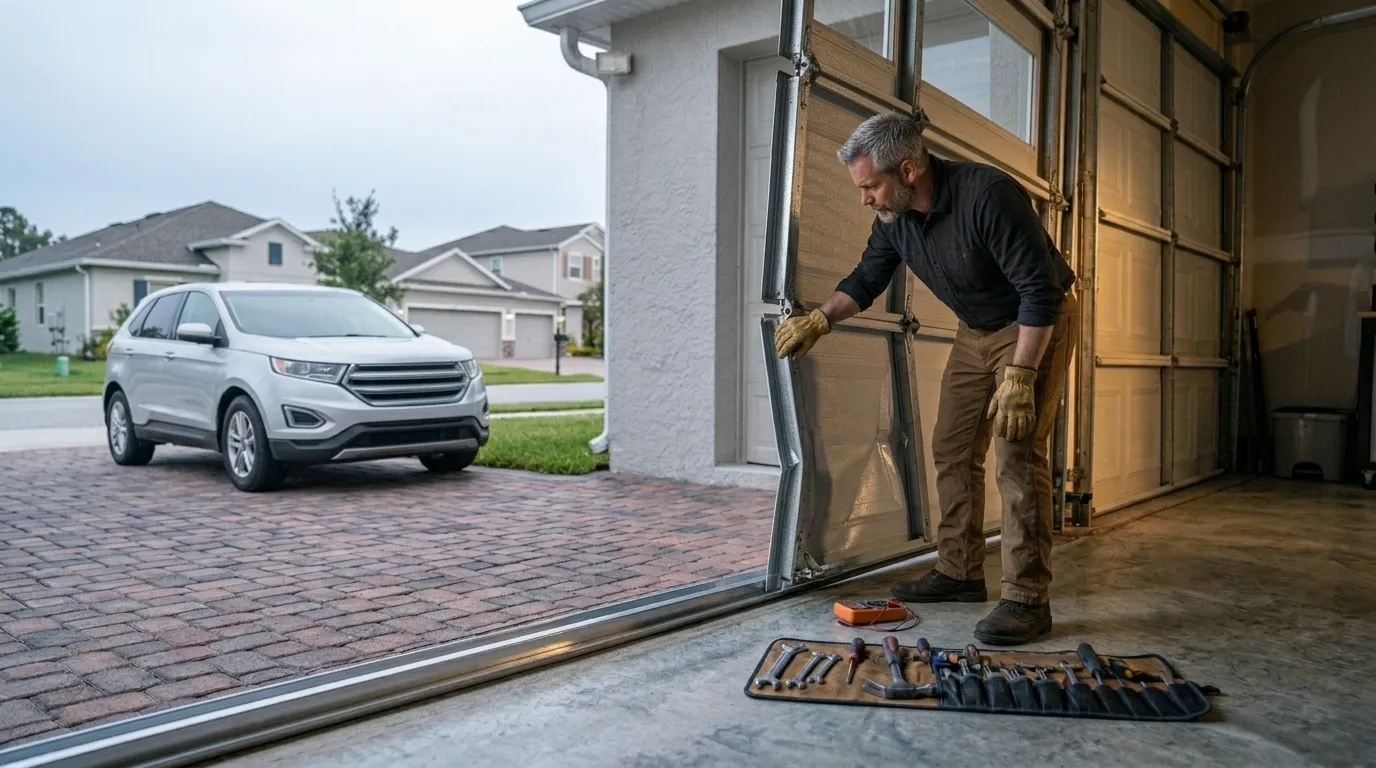
A steel roller with a flattened edge doesn't ride smooth - it walks sideways a little on every pass, and over enough cycles that walking bends the track lip or opens up the gap where the roller sits.
Swap the roller alone on a bent track and the new roller wears the same way in a fraction of the time. We check the track alignment on every call before we touch a roller, not after. The other place it goes sideways: cables.
On an older door, a roller that's binding puts extra load on the lift cable every time the opener has to fight past the rough spot, and cables don't fail gracefully - they fray then snap. We look at cable condition alongside the rollers because replacing one and leaving the other frayed just moves the next call up by a few months.
On the truck
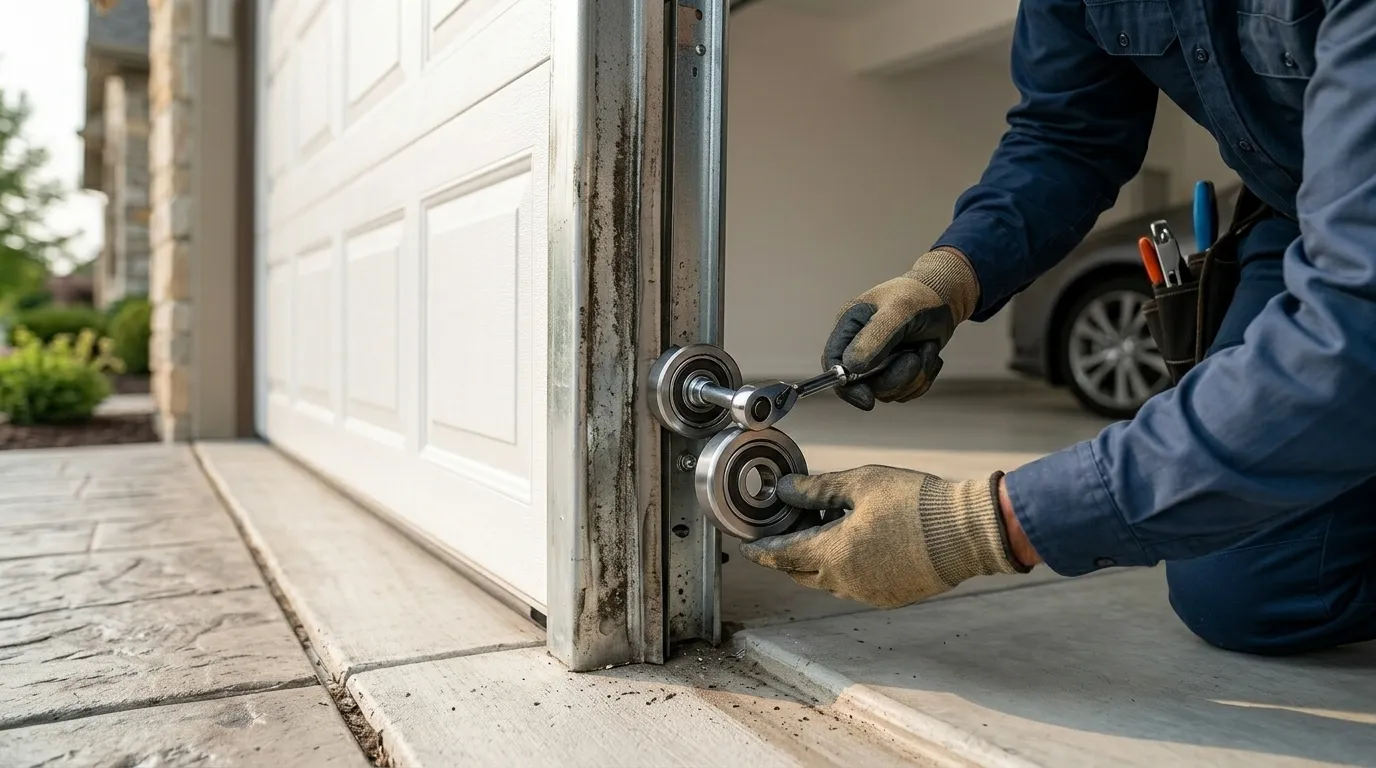
For a straight roller job we carry sealed-bearing nylon rollers in the common stem lengths and both 2-inch and 3-inch wheel sizes, since builder-grade doors from the late 1980s used either depending on the track width. We also carry short sections of standard track for the cases where the old track has a lip damaged badly enough that a straightening job won't hold. What we don't carry, and won't pretend to have on the truck, is track or hardware for oversized or custom commercial doors - those are special-order parts, and if that's what you've got, we'll tell you on the phone so you're not waiting around for a fix we can't do that day. For a normal residential double or single door with worn steel rollers, the roller and any track work usually gets done in one visit.
Questions
No. We run out of Wheaton, about 19 miles away, and cover Homer Glen on a scheduled basis rather than with a stationed truck. Call ahead so we can bring the right rollers and track hardware for a builder-grade door - we won't be driving back for a second trip if we can help it.
If the door grinds or thumps rhythmically while moving but the opener motor sounds normal and the door still reaches full open and closed, that's usually rollers, not the opener. A door that stalls partway or reverses on its own points more toward the opener or the springs - tell us which symptom you're seeing when you call.
For this climate band, yes. Nylon rollers with a sealed bearing handle the seasonal temperature swing better than plain steel, which tends to wear a flat spot on one side over time. Most original 1988-era doors here still have the steel version, which is why they're due.
Explore more
Ready when you are
Wheaton Garage Door Pros repairs and installs garage doors, springs and openers in Wheaton, IL and the surrounding area.