
Guide
What to Know Before You Buy a New Garage Door in Wheaton
A straight-talk look at buying a replacement garage door here in Wheaton, IL - what the town's housing stock and cold winters mean for your choice, and when it can wait.
Local detail
What to Check
Start with the door itself, not the opener. A lot of houses around Wheaton went up between 1938 and 2003, with the heaviest run of construction in the 1960s and 70s spread across the area's 89 named subdivisions. That means a good share of the doors we see are original to a house from that era, or a straight swap done decades ago on the same track spacing and headroom. If your garage has low headroom or an off-center torsion setup, that's a leftover from how these homes were framed, and it narrows which new doors will actually fit without reworking the jambs.
Check the track width, the spring type, and whether the opener bracket lines up with anything made today. If the door is original to a 1960s or 70s build, the panel gauge is usually thinner steel than what's sold now, so a straight one-for-one swap often isn't possible anyway - you're picking a new door, not matching an old one. Measure twice before you call anyone for a quote, because rough openings on houses this age vary more than builders admit.
The area
What the Weather Here Does to It
Wheaton sits in a cold, moderate climate band, and that shapes what a door has to do beyond just opening and closing. Steel contracts in a hard freeze, and on an older door with a worn weather seal, that means a visible gap at the bottom corners by January even if the door looked fine in October. Panels on uninsulated doors from the 1960s-70s stock flex more in a deep cold snap, and that flex is what eventually cracks a bottom panel or pops a roller out of track.
If you're buying new, insulation value matters less for your heating bill than most people think and more for keeping the door from working itself loose in freeze-thaw cycling over a winter. A foam-filled door with a decent seal handles that cycling better than a single-layer steel door, full stop. This isn't about comfort inside the garage - it's about the door surviving the swings without needing a service call every February.
What we find
When Waiting Is Fine
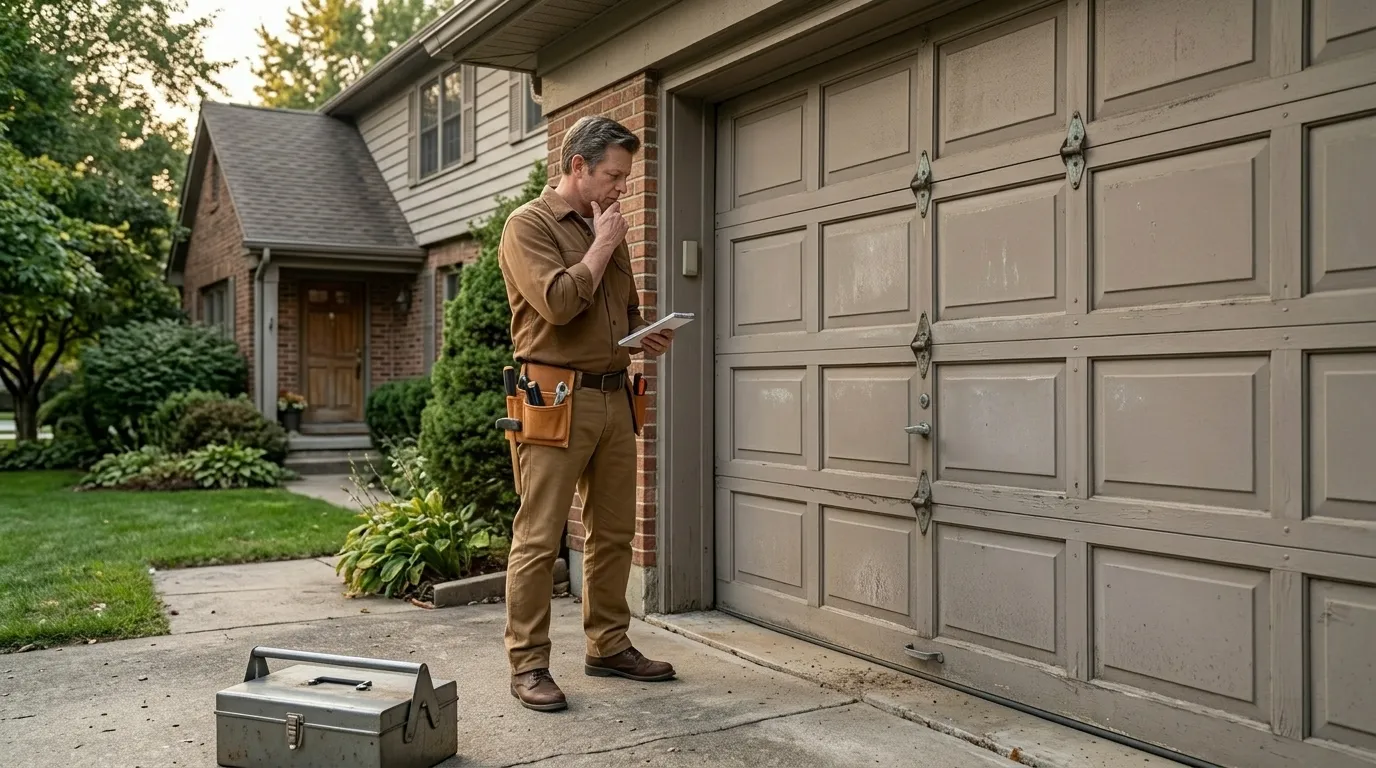
Not every dent or squeak means buy new. A door that's cosmetically rough but still balances evenly, seals at the bottom, and doesn't grind on the rollers can run for years yet - replacing it early is money spent on looks, not function. Given how much of the housing stock here dates to the 1960s and 70s, we get a lot of calls where the real issue is a worn roller or a spring nearing the end of its cycle count, not the door panel itself.
Fix that part and the door earns another five or ten years. Where it stops being fine: if the bottom section is cracked through, if the door is visibly racking side to side when it moves, or if you can't get parts for the track hardware because it's old enough that nobody stocks it. At that point a repair is a stall, not a fix, and you're better off putting the money toward a new door instead of feeding an old one piecemeal.
How we work
What Is Going On
Median household income across the Wheaton service area runs $97,861, and that tracks with what we see on the job: more homeowners choosing a full replacement over a string of patch repairs once a door starts failing. Across the wider area there are 542,515 households, with 263,398 of those owning the house the door is attached to - meaning most of the calls we take are from people who plan to live with their decision for a long stretch, not landlords weighing the cheapest fix. That changes what's worth buying.
Neighbors close by are working through the same questions: Glen Ellyn two miles east, Winfield three miles north, and Carol Stream and Glendale Heights a bit further out are all sitting on similar 1960s-70s stock, so the same headroom and track issues show up there too. If you're weighing options, our page at / has more on what we offer, but the short version is this: the age of the house should drive the decision more than the age of the door.
Questions
Common questions
Will a new garage door fit my house without reworking the frame?
Depends on the rough opening. A lot of Wheaton houses from the 1960s and 70s have narrower headroom or off-center track mounts than current standard doors expect. Measure your opening and track clearance before you shop - it's the single biggest reason a
placeholder
placeholder
Ready when you are
Need a garage door sorted in Wheaton?
Wheaton Garage Door Pros repairs and installs garage doors, springs and openers in Wheaton, IL and the surrounding area.