
Guide
How Wheaton's 1938 to 2003 Housing Stock Shapes Garage Door Repair
Wheaton homes date mostly from 1938 to 2003, many built without modern insulation codes, which matters for garage door repair in cold winters here in Wheaton.
Local detail
What to Check
Most houses here went up between 1938 and 2003, with the median sitting at 1976. That means a lot of doors on houses built before insulation rules were ever written into the code, installed back when the surrounding stock skewed heavily 1960s and 70s. If your door is original or close to it, start by looking at the panel face.
A single layer of steel or a slab of wood with no foam backing behind it will show warping at the bottom corners first, especially where the door meets the slab. Run your hand along the inside of the panel - if it's cold to the touch and there's no rigid backing, you've got the older style construction that was standard for that build era. Check the rollers and hinges too.
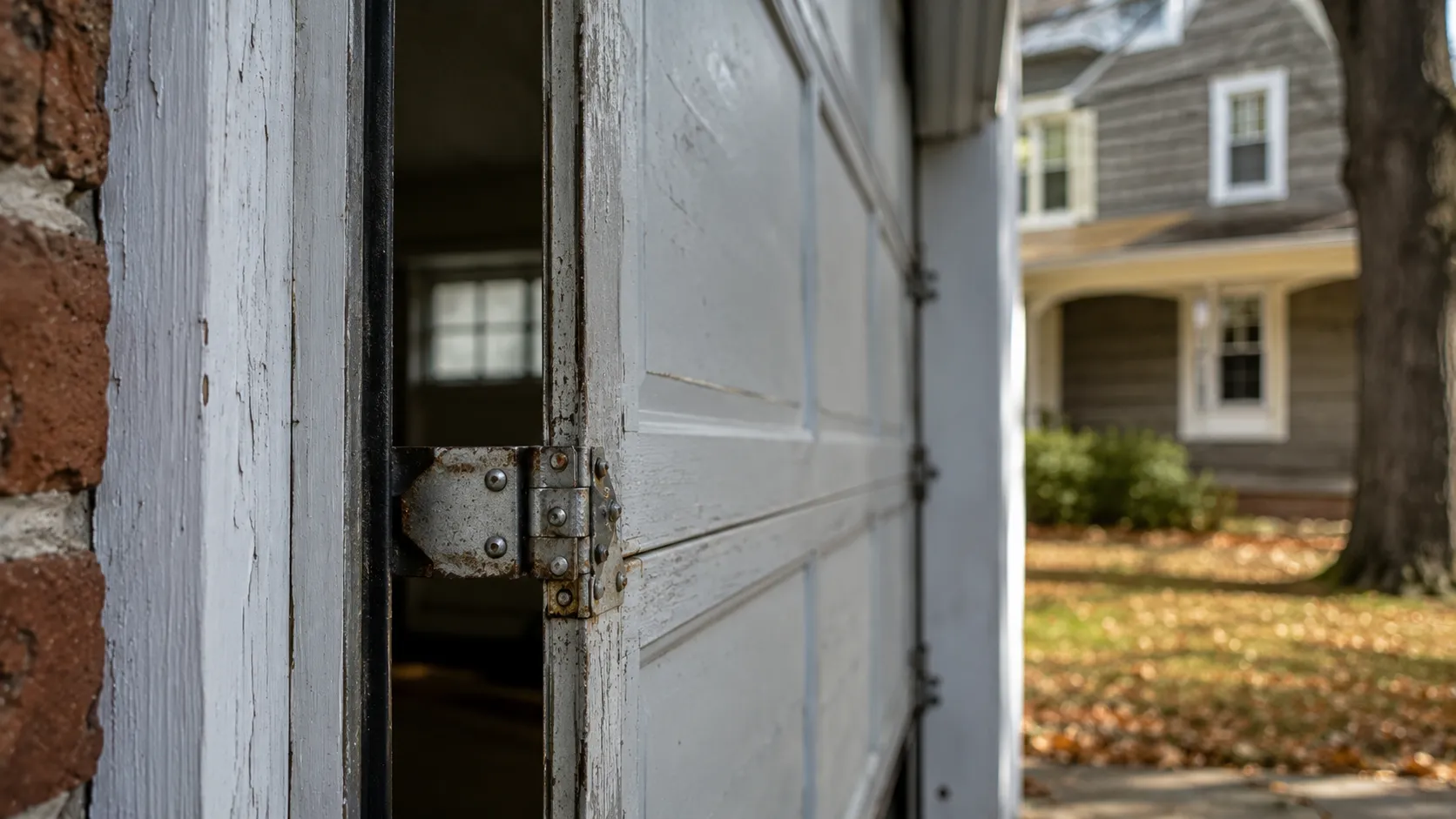
Original hardware from a 1970s install has usually been swapped once already, but if it hasn't, the steel rollers will be loud and the hinges will have play in them that new nylon rollers don't have. Look at the bottom seal. On a door this age it's often the original rubber, cracked and no longer sealing against the slab, which lets in more cold air than the door itself was ever designed to keep out.
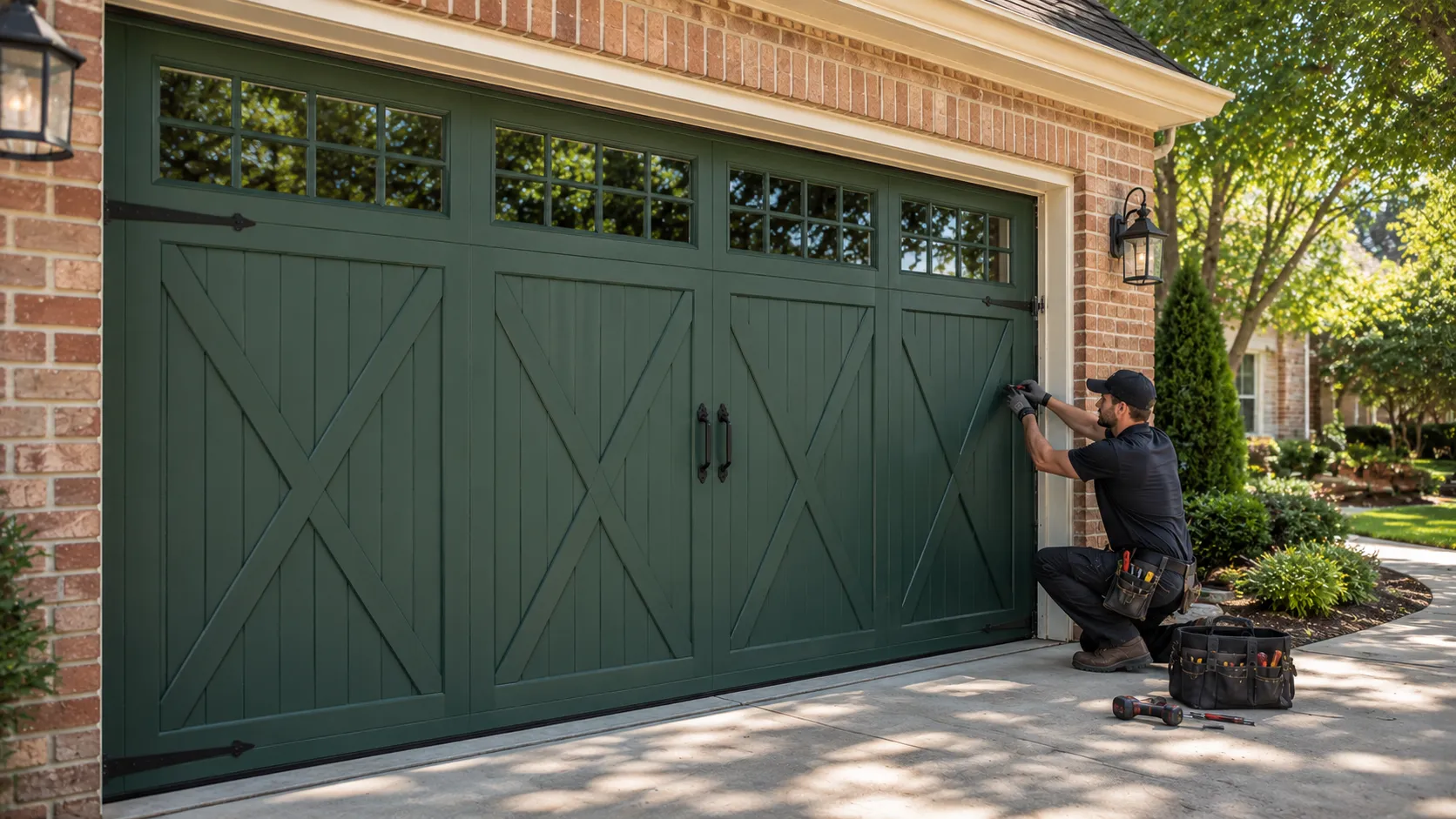
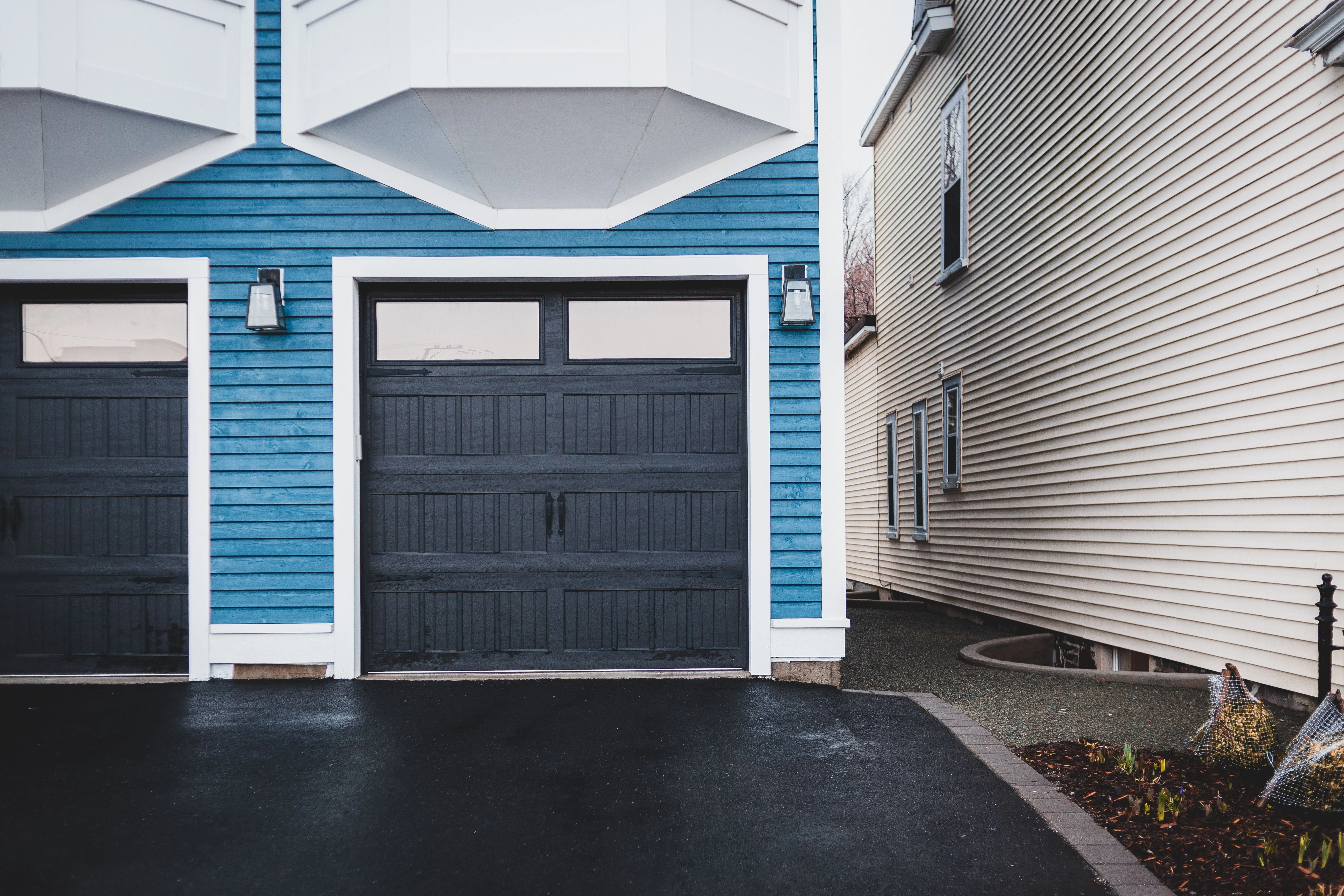
The area
What the Weather Here Does to It
The area sits in a cold-moderate climate band, so uninsulated steel panels condense heavily on the inside face during winter. Warm garage air hits a cold steel panel with no thermal break and beads up, and that moisture runs down to the bottom panel and the track hardware. Over enough winters that's where you see rust starting, right at the bottom roller brackets and the first foot of track above the floor.
Temperature swings matter too. A door with no insulation moves more than an insulated one when the outside temperature drops fast, and that movement works on the torsion spring and the cable drums a little harder each cycle. On an older door that's already carrying decades of use, that extra flex is often what finally shows up as a spring failure on a cold morning rather than a mild one.
Ice is the other piece. Without a rubber-and-vinyl composite seal, which wasn't standard when a lot of this housing went up, water gets under the bottom panel, freezes overnight, and can lock the door to the slab. None of this is dramatic on its own, but it's why an original door in this climate wears differently than the same door would somewhere warmer.
What we find
When Waiting Is Fine
Not everything on an old door needs a same-day call. A single roller that's started to squeal but still runs smooth, a hairline dent in a panel that doesn't affect the seal, or an opener that takes an extra second to engage in the cold - those can wait for a scheduled visit rather than an emergency one. Across the 89 named areas that make up this stretch of housing stock, the same era of doors shows up on street after street, and a lot of those doors run fine with minor cosmetic wear for years.
What doesn't wait is a spring that's already given out, a door that's come off one side of the track, or a cable that's frayed near the drum. Those get worse fast, and on a door built before insulation rules, the panel itself is often heavier than a comparable newer door, which puts more load on whatever's failing. If you're not sure which category you're in, a loose or off-balance door - one that won't stay put halfway open - is always the one to call about now, not next week.
How we work
What Is Going On
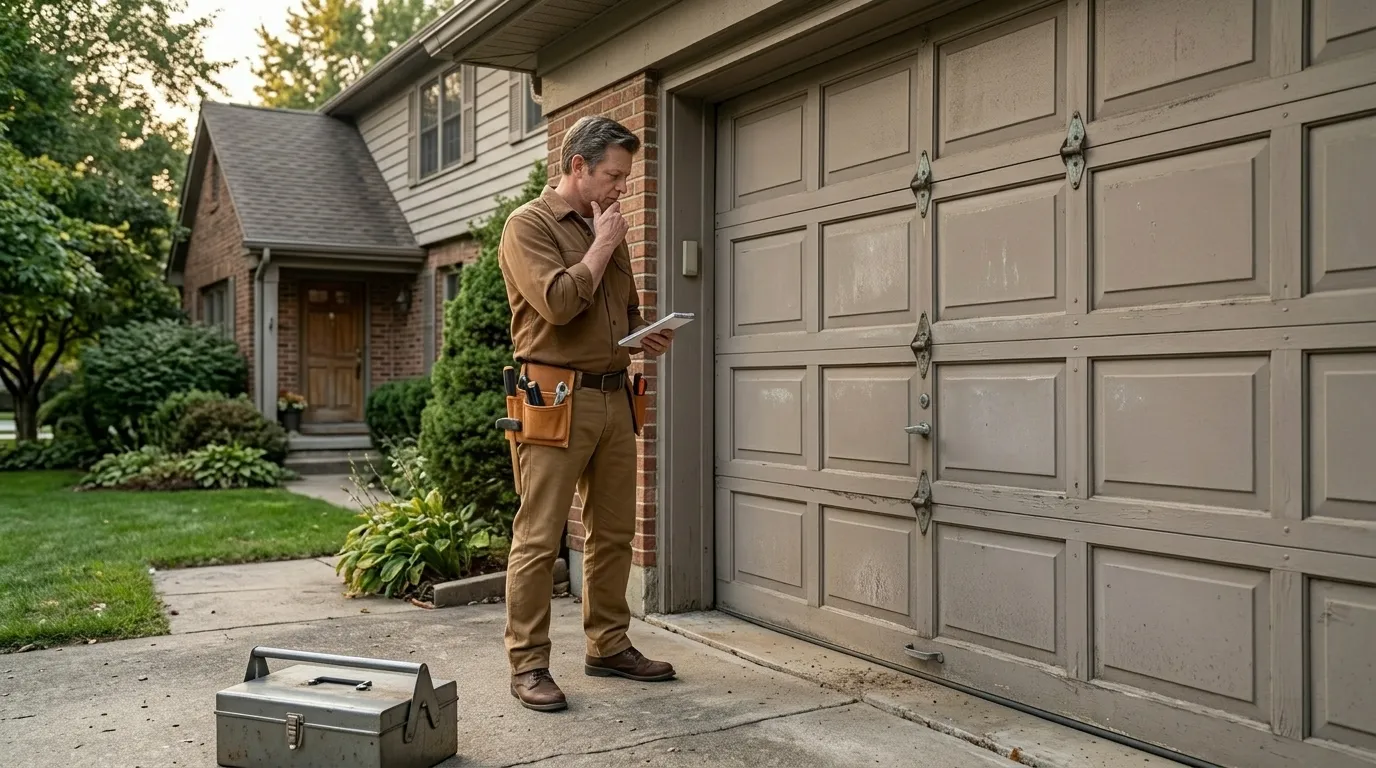
When we're diagnosing a door on a house from this era, the first question isn't the symptom, it's the build year, because a 1976-era door and a 2003-era door on the same street can have completely different hardware even if they look similar from the driveway. Homeowners two miles east in Glen Ellyn or three miles north in Winfield are working with the same age of door, for the same reason - this whole corridor filled in mostly across the same decades. Here's the honest limitation: on doors from the early end of that range, original panel sizes and track spacing sometimes don't match what's stocked for same-day replacement, and a special-order panel can take longer than the repair itself.
In those cases, if the door is more than about half its useful life past, we'll tell you straight that a full replacement with an insulated panel is the better spend than chasing parts for an original slab. That's not the answer for every call, but on a door built before insulation rules were common, it's the honest one more often than people expect.
Questions
Common questions
Is my garage door too old to repair?
Age alone doesn't decide it, but if your house dates to the earlier end of the 1938 to 2003 range and the door looks original, we look at whether replacement panels are even still available in that size before quoting a repair. Sometimes the smarter move is a new insulated door rather than chasing parts for one built before current code.
Why does my garage door sweat on the inside in winter?
That's condensation, and it's common on original uninsulated steel doors in this cold-moderate climate. Warm air inside the garage meets a cold steel panel with no foam backing and beads up. It's not a sign of failure, but over years it can contribute to rust at the bottom panel and track hardware.
Should I fix or replace an original door from the 1970s?
Depends on the hardware and how heavy the panel is. A lot of 1960s and 70s doors are solid steel or wood with no insulation, which puts more strain on springs than a modern door does. If the springs or track are already failing, replacing with an insulated door often costs less over time than repeated repairs.
Ready when you are
Need a garage door sorted in Wheaton?
Wheaton Garage Door Pros repairs and installs garage doors, springs and openers in Wheaton, IL and the surrounding area.