
Guide
What to Check When a Spring Goes in Cold Weather
In Wheaton, IL homes built between 1938 and 2003, cold snaps make torsion springs fail without warning. Here's what to check first, and what can safely wait.
Local detail
What to Check
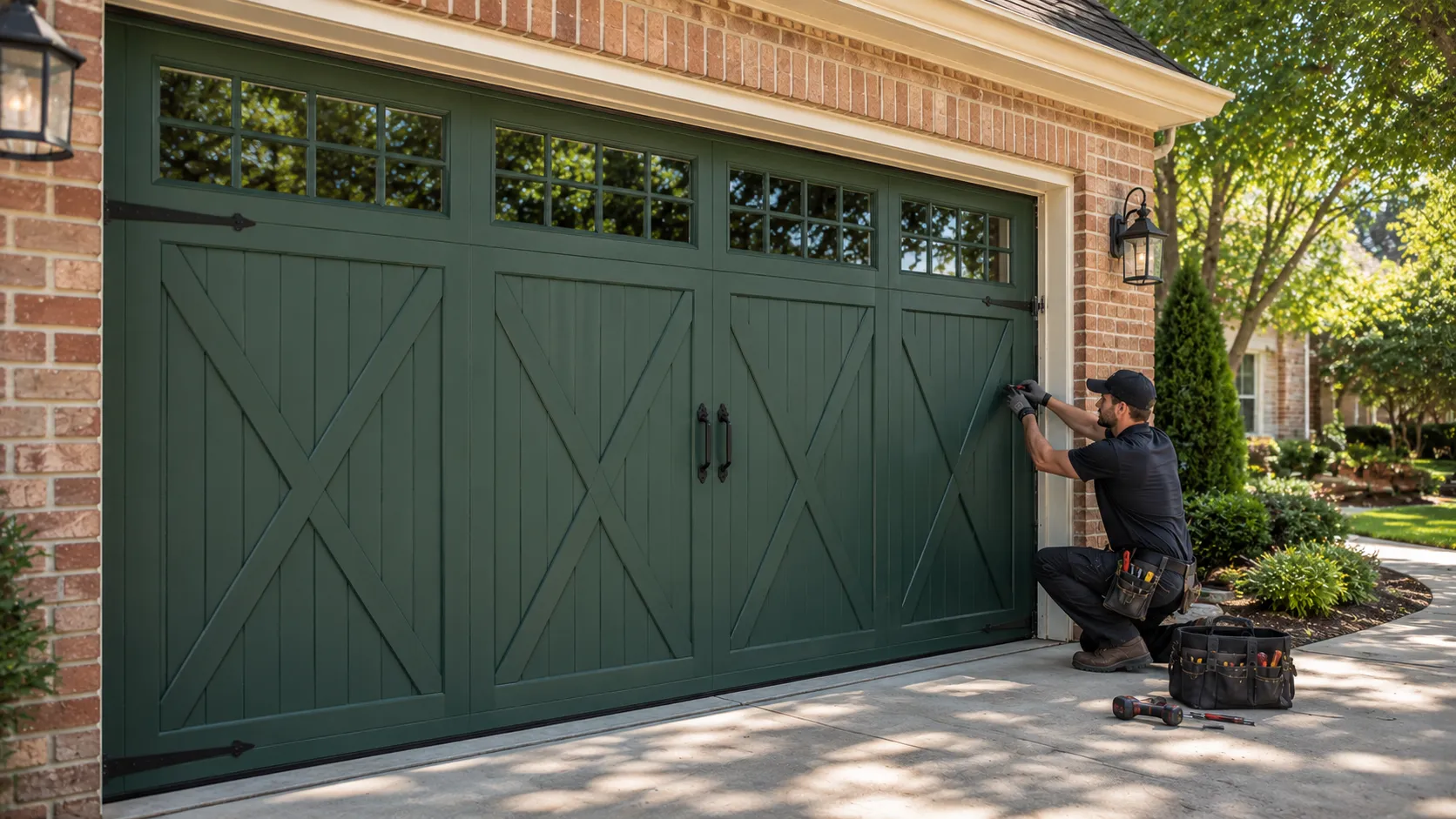
Start with the spring itself. On most Wheaton houses that's a torsion spring mounted above the door on a steel shaft, and if it's broken you'll usually see a gap in the coil or the door just won't lift past a few inches, even with help. Don't try to force it open with the opener - that strains the motor and can bend the track.
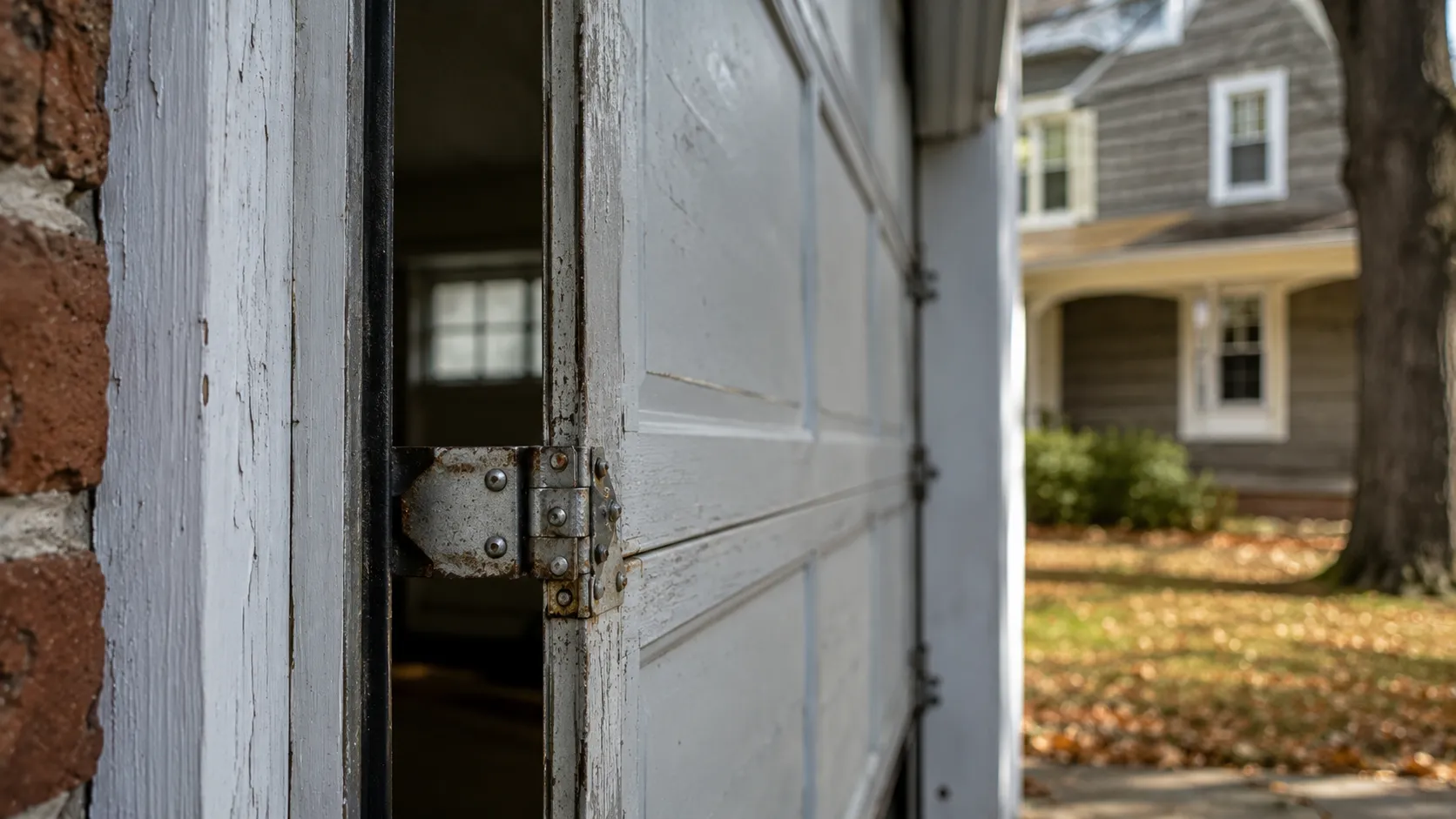
Next, look at the cables on either side of the door. A spring failure sometimes takes a cable with it, and a frayed or slack cable is not something to leave overnight. Check the bottom brackets too, since a snapped spring under tension can whip a cable loose from its drum.
Most houses on this side of Wheaton went up between 1938 and 2003, with the median landing around 1976, which means a lot of original torsion springs are now pushing fifty years old. If your house falls in that older band, don't assume the spring that broke is the only one about to go. On a two-spring setup, when one fails the other is usually close behind - it's carried extra load for however long the door was still running.
The area
What the Weather Here Does to It
Wheaton sits in a cold moderate climate band, so garages here see real freeze-thaw swings that steel doesn't shrug off. A spring under tension is already storing energy, and cold makes the steel stiffer and less willing to flex through that last few degrees of travel. That's when a spring with a hairline fatigue crack - the kind that's been building for years - finally lets go, usually on the first hard cold morning rather than mid-winter.
It isn't the cold itself doing new damage in a single night. It's the cold exposing wear that was already there. A spring that's flexed through forty Illinois winters has cycled through that stiffening and loosening thousands of times, and each cycle takes a small amount off its working life.
Unheated garages make this worse. If your garage runs colder than the rest of the house, which is common in the older stock here, the hardware sits at outdoor temperature most of the winter. That's the setup where a cold morning turns a slow fatigue crack into a sudden failure.
What we find
When Waiting Is Fine
Not every cold-weather symptom is an emergency, and it's worth saying plainly: if the door still opens and closes smoothly, a little extra noise or a slightly slower lift on a cold morning does not mean the spring is about to snap. Steel contracts in the cold and hardware gets stiffer for a few hours until the sun warms the garage a bit. That's normal wear talking, not failure.
What can wait until a scheduled visit: a squeaky roller, a door that seems a hair off level, or a spring that looks fine and is holding the door's weight properly when you test it disconnected from the opener. None of those need a same-day call.
What can't wait: a door that's stuck partway, a visibly gapped spring coil, or a cable hanging loose. Those are load-bearing failures, and a door in that state can drop without warning.
Honest limitation here - once a spring is broken, we're not going to talk you through fixing it yourself over the phone. Torsion springs are under enough tension to cause serious injury, and that's not a job to learn on your own garage.
How we work
What Is Going On
Across the wider service area there are 263,398 owner-occupied houses, and a good share of them still carry the same door hardware they were built with. In the 89 named areas that make up this stock, the 1960s and 70s builds are the majority, and that's exactly the era where torsion hardware starts to show its age. A spring rated for a certain number of cycles doesn't fail the moment it hits that number - it just gets weaker, and cold weather is what finally tips a weak spring into a broken one.
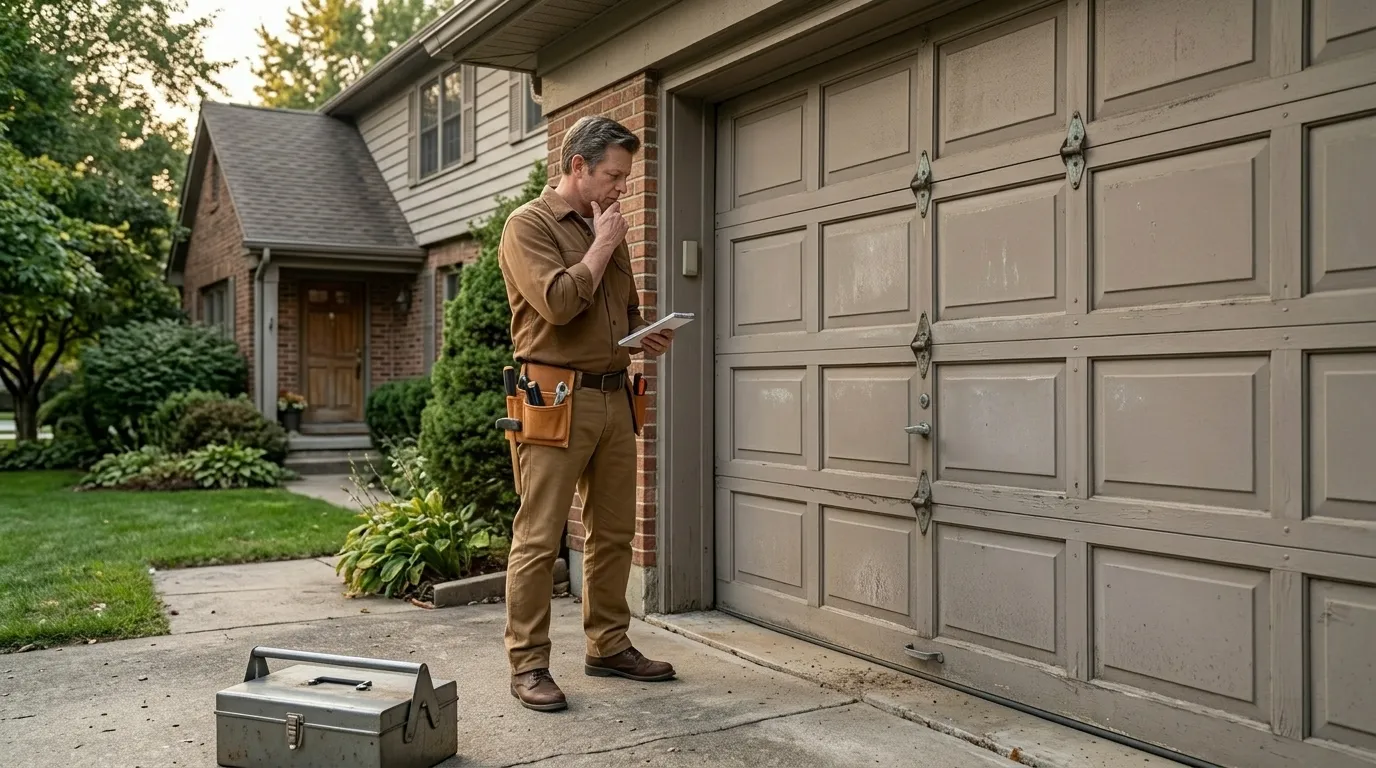
With a median household income of $97,861 across the area, replacement is usually within financial reach when a spring goes, but that doesn't mean replacement is always the right call over a straight repair. A single broken spring on a door that's otherwise sound is often a spring swap, not a full door job. Where it gets more complicated is when the drum, cable, or track shows wear from running on a bad spring for a while before it finally let go - that's when one problem becomes three.
Questions
Common questions
Why did my spring break on the coldest morning of the year?
Cold doesn't cause the crack, it exposes one that's already there. Steel stiffens in low temperatures, and a spring with fatigue built up over years of cycling has less give left in it. The first hard freeze is often just the moment a weak spring finally runs out of flex.
If one spring broke, do I need to replace both?
On a two-spring door, yes, we'd recommend it. Both springs have carried the same load for the same number of years, and if one failed from fatigue, the other is close behind. Replacing just one usually means a second call within a year or two.
Is it safe to open the door manually until someone can look at it?
If the spring is fully broken, no - the door has no counterbalance and can drop fast, and it will be heavy enough to strain your back badly. Leave it closed and disconnect the opener only if you need brief access, then keep the door propped or blocked.
My garage isn't heated - does that shorten spring life?
It can. Hardware in an unheated garage sits at outdoor temperature most of the winter, so it goes through more of the stiffen-and-relax cycling that wears a spring down. It's not the main factor - age and use cycles matter more - but it's a real contributor.
Ready when you are
Need a garage door sorted in Wheaton?
Wheaton Garage Door Pros repairs and installs garage doors, springs and openers in Wheaton, IL and the surrounding area.