
Guide
Wide Doors, Big Sails: Wind and Wheaton's Older Garages
Wheaton's 1960s-70s split-levels often carry wide garage doors with no horizontal strut, and wind loads find that gap fast. Here's what actually matters.
Local detail
What to Check
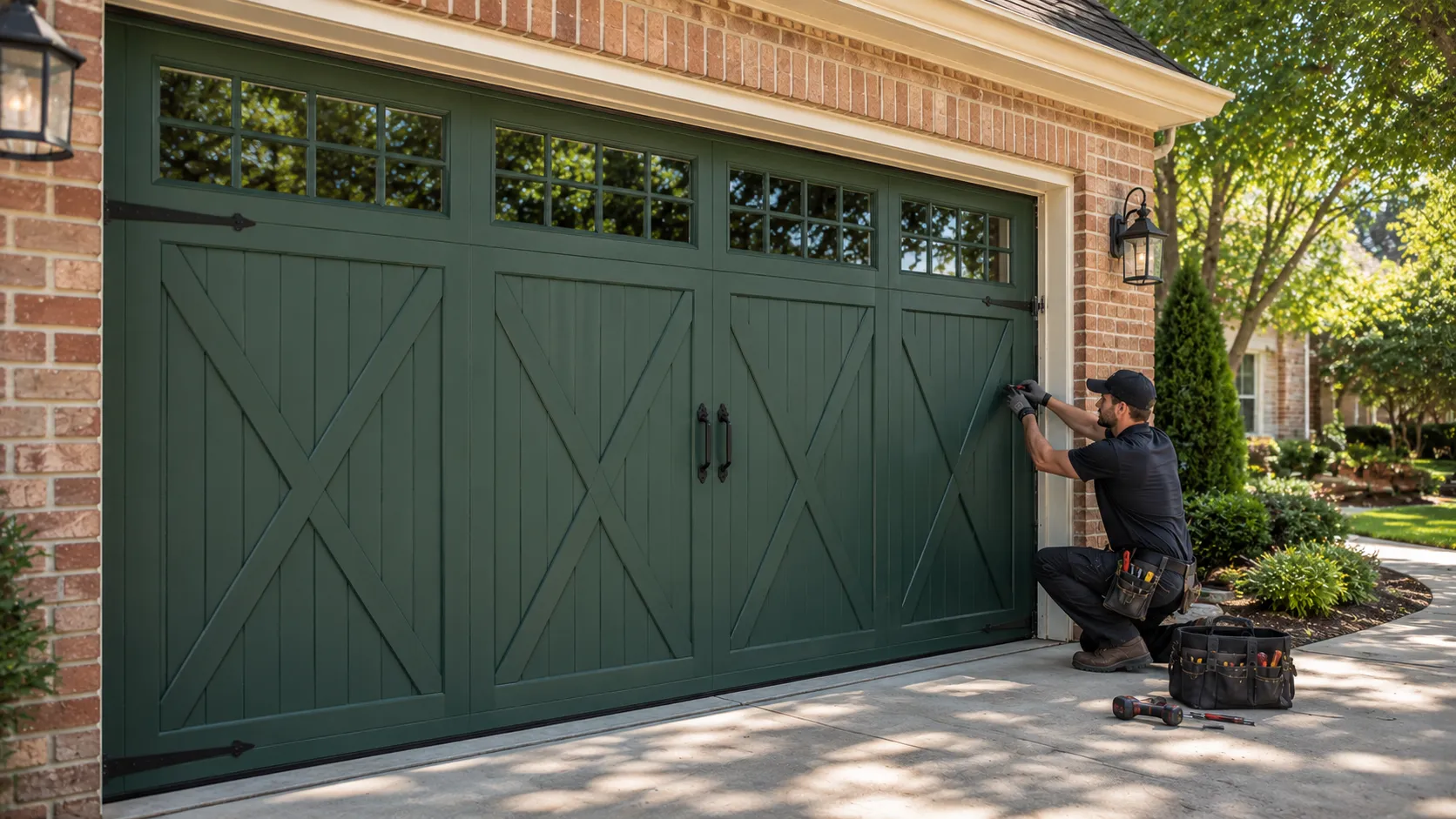
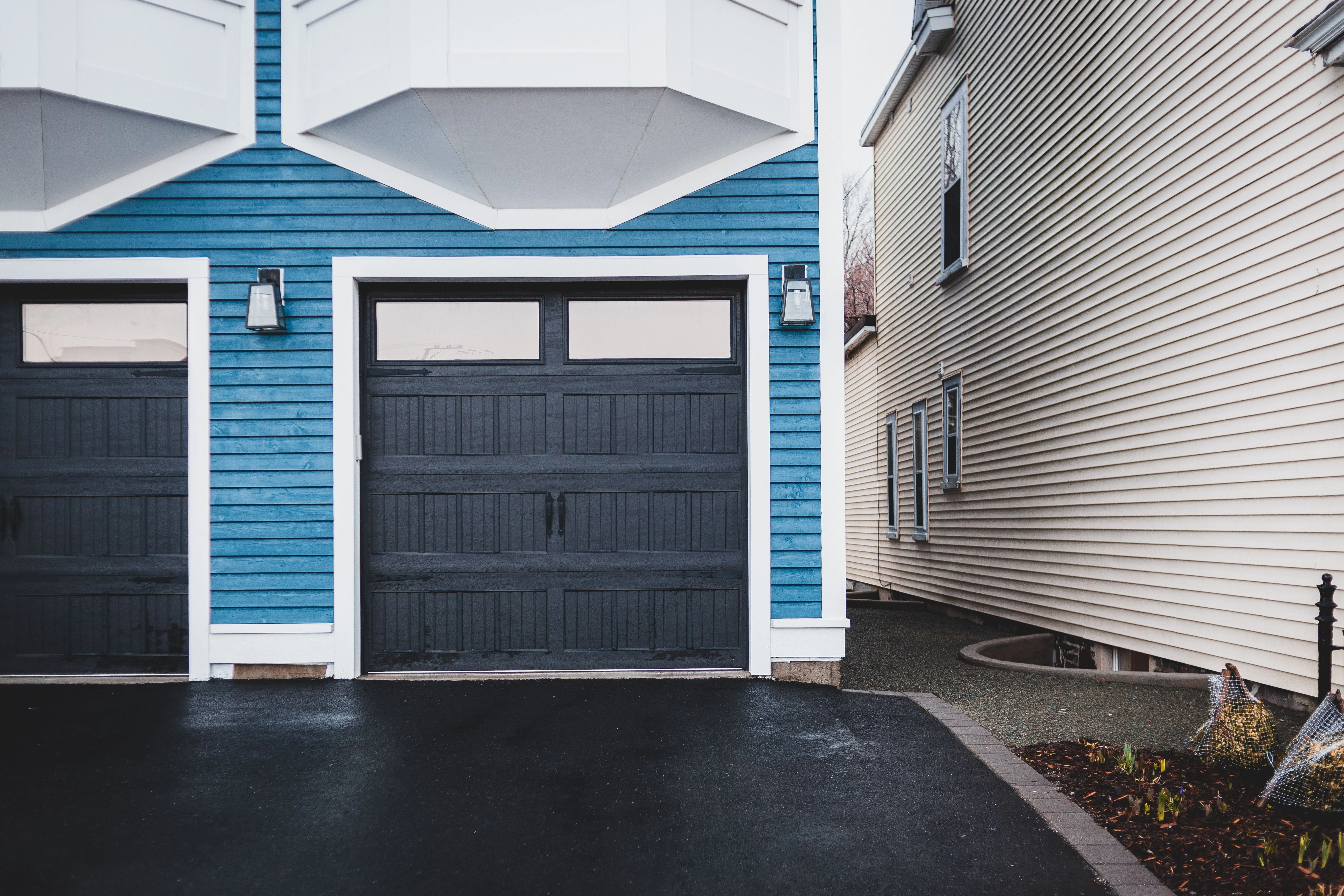
Start with the size. A single 16-foot door has roughly twice the surface area of an 8-foot single, which means it catches roughly twice the wind load in the same gust. Wheaton's housing runs mostly 1960s and 70s, the era when a lot of split-levels and raised ranches were built with those wide double doors as standard. Walk the inside of the door and look for a horizontal strut - a steel bar running across the top one or two panels. If you don't see one, the door is bracing itself against wind with sheet steel alone.
Next, check the track brackets where they bolt into the framing, not just the door end. On houses from that build era, the jamb bracket is often the original hardware, and 50-plus years of seasonal expansion loosens the lag screws even if nobody's touched them. Give each one a wrench check, not just a look.
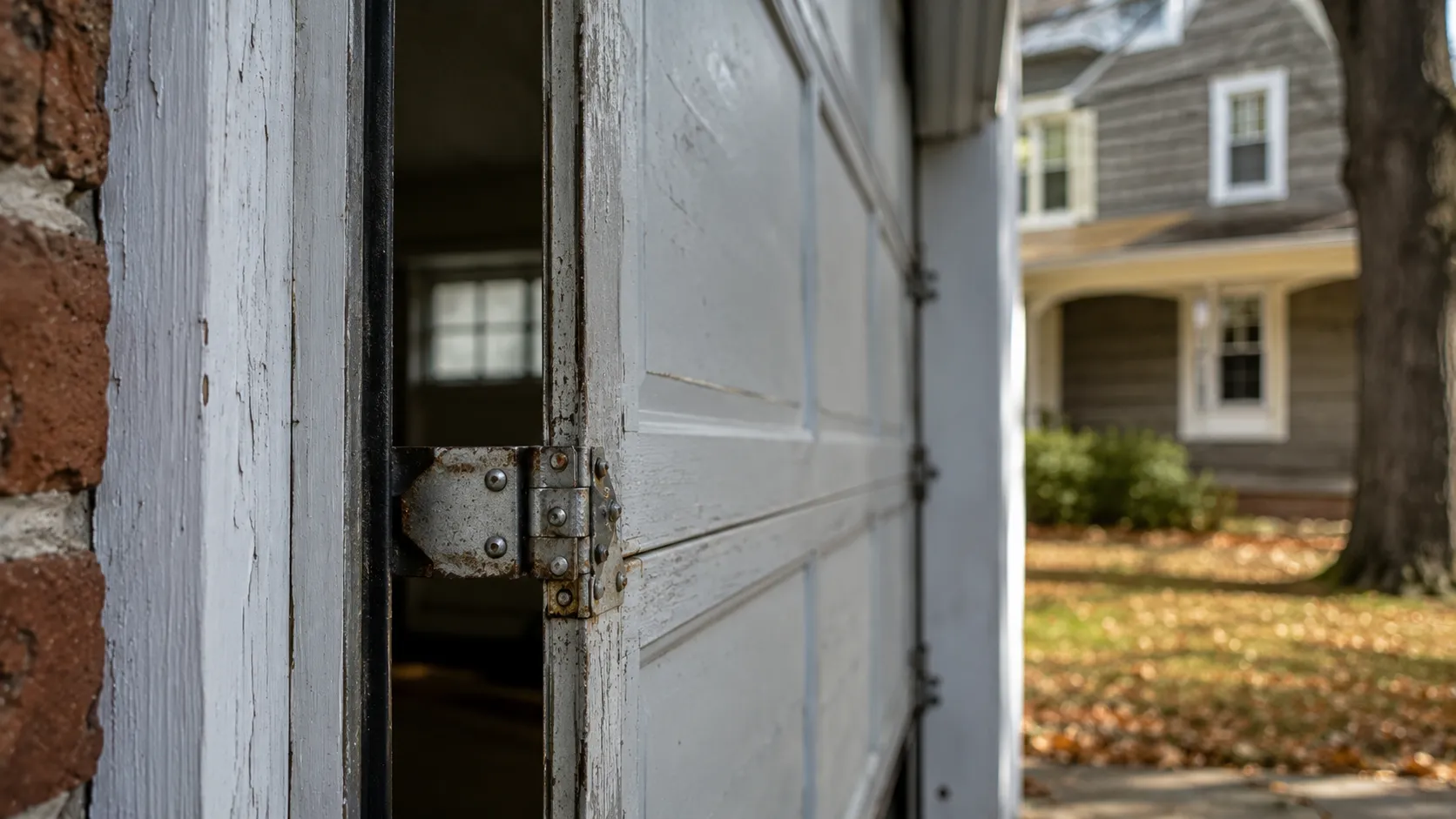
Last, check the end hinges on the top section for any bend or elongated screw holes. That's usually the first place a wide door tells you it's been flexing more than it should in wind, well before a panel cracks or a track bends.
The area
What the Weather Here Does to It
Wheaton sits in a cold, moderate climate band, which in practice means real freeze-thaw cycling every winter and spring rather than one hard freeze that stays put. That cycling works on the same bolts and brackets that wind is loading from the other direction - metal contracts in the cold, the joint gets a hair looser, then a gust finds that play instead of solid steel. It's a slow problem, not a dramatic one, which is exactly why it gets missed.
Most of the area's garage doors date to houses built between 1938 and 2003, with the median landing around 1976. A door installed in the mid-70s on a wide opening was built to a lighter standard than what's sold today, and it's had four or five decades of that freeze-thaw cycle working on its original hardware. Add a gusty front moving through - the kind that doesn't need to be severe to matter on a 16-foot span with no strut - and you get the bang and shudder homeowners describe as the door 'breathing' in a storm. That's the door telling you where its weak point is before it fails there.
What we find
When Waiting Is Fine
Not every rattle needs a same-week call. If a wide door shudders in a gust but the track brackets are tight, the hinges are straight, and the panels aren't bowing, that's the door doing what a wide, unbraced steel panel does in wind - it flexes a little and it's fine. A cosmetic dent from years back, a scuff on the bottom panel, a little daylight at the weatherstrip on one side: none of that is urgent, and there's no need to replace a door that's otherwise sound just because it moves audibly in wind.
Here's the honest limit on advice like this: we can tell you what to look for, but we can't tell you the condition of your specific door and hardware without seeing it, and we won't sell you a strut kit or a new door over the phone based on a description. If the checks above come back clean, it's reasonable to leave it until your next scheduled look, especially heading into a season without major fronts forecast. Waiting is the wrong call once you see bent brackets or elongated hinge holes - that's a hardware failure in progress, not cosmetic wear.
How we work
What Is Going On
A garage door's wind resistance comes from the panel steel and the strut bracing working together, not the track or the opener. On a wide door with no horizontal strut, a big gust puts almost all the load on the panel skin and the end hinges, which is more than that hardware was speced to handle back when a lot of Wheaton's homes went up in the 1960s and 70s. It's not a defect - it's a difference in what building practice assumed a garage door needed to survive at the time.
Across the wider area's 263,398 owner-occupied houses, this same gap shows up wherever a wide original door meets a house from that build window. It's fixable: a retrofit strut kit reinforces the top section without replacing the whole door, and it's the more common fix here than full replacement. With median household income in the area near $97,861, most owners can plan for that kind of upgrade rather than wait for a failure to force the decision. The point isn't to alarm anyone about wind - it's that a door built for 1976 conditions is still doing 1976 job on a house that's changed very little since.

Questions
Common questions
Why does my garage door shake so much when it's windy?
On a wide double door, especially one from an older Wheaton home without a horizontal strut, wind pushes on a lot of unsupported panel steel. Some flex and noise in a strong gust is normal for that setup. It becomes a problem when the hinges bend, the brackets loosen, or the noise gets worse over successive storms rather than staying the same.
Do older Wheaton homes need a strut kit on their garage door?
Not every one, but many built in the 1960s and 70s with a wide single door and no reinforcement benefit from one. It's a bolt-in upgrade to the top panel, cheaper than replacement, and it addresses the exact weak point - panel flex under wind load - that shows up on doors from that build era.
How do I know if my garage door hardware is original?
Look for the bracket style at the track-to-jamb connection. Original hardware from a 1960s-70s build is usually a simpler stamped bracket with fewer mounting points than what's used today. If the lag screws are original wood screws rather than structural screws, that's another sign nobody's upgraded it since the house was built.
Ready when you are
Need a garage door sorted in Wheaton?
Wheaton Garage Door Pros repairs and installs garage doors, springs and openers in Wheaton, IL and the surrounding area.