
Guide
When to Stop Repairing a Wheaton Garage Door
Wheaton homes mostly date to the 1960s-70s. Here's how that age and our cold winters decide whether your door needs a repair or a new one.
Local detail
What to Check
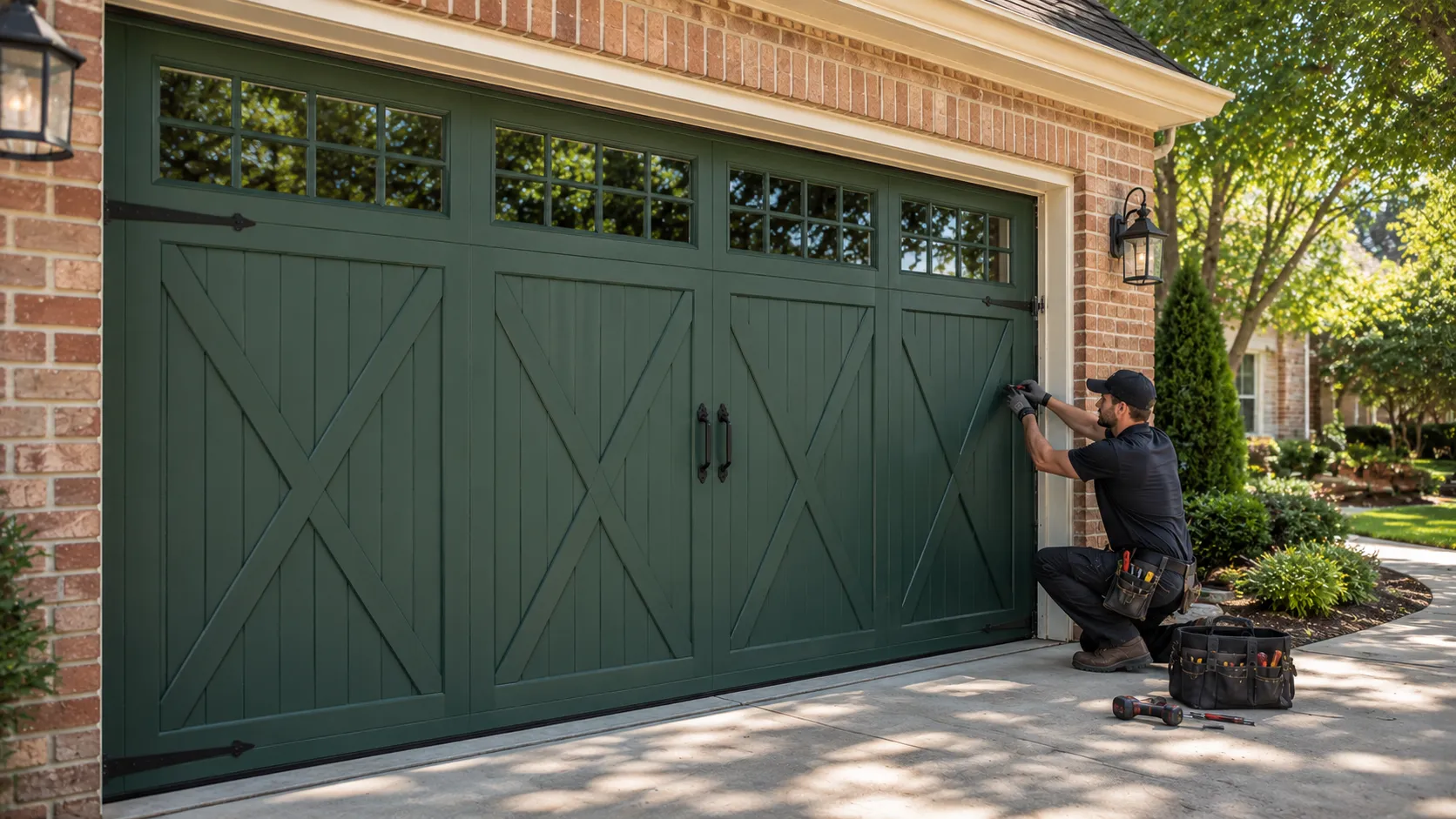
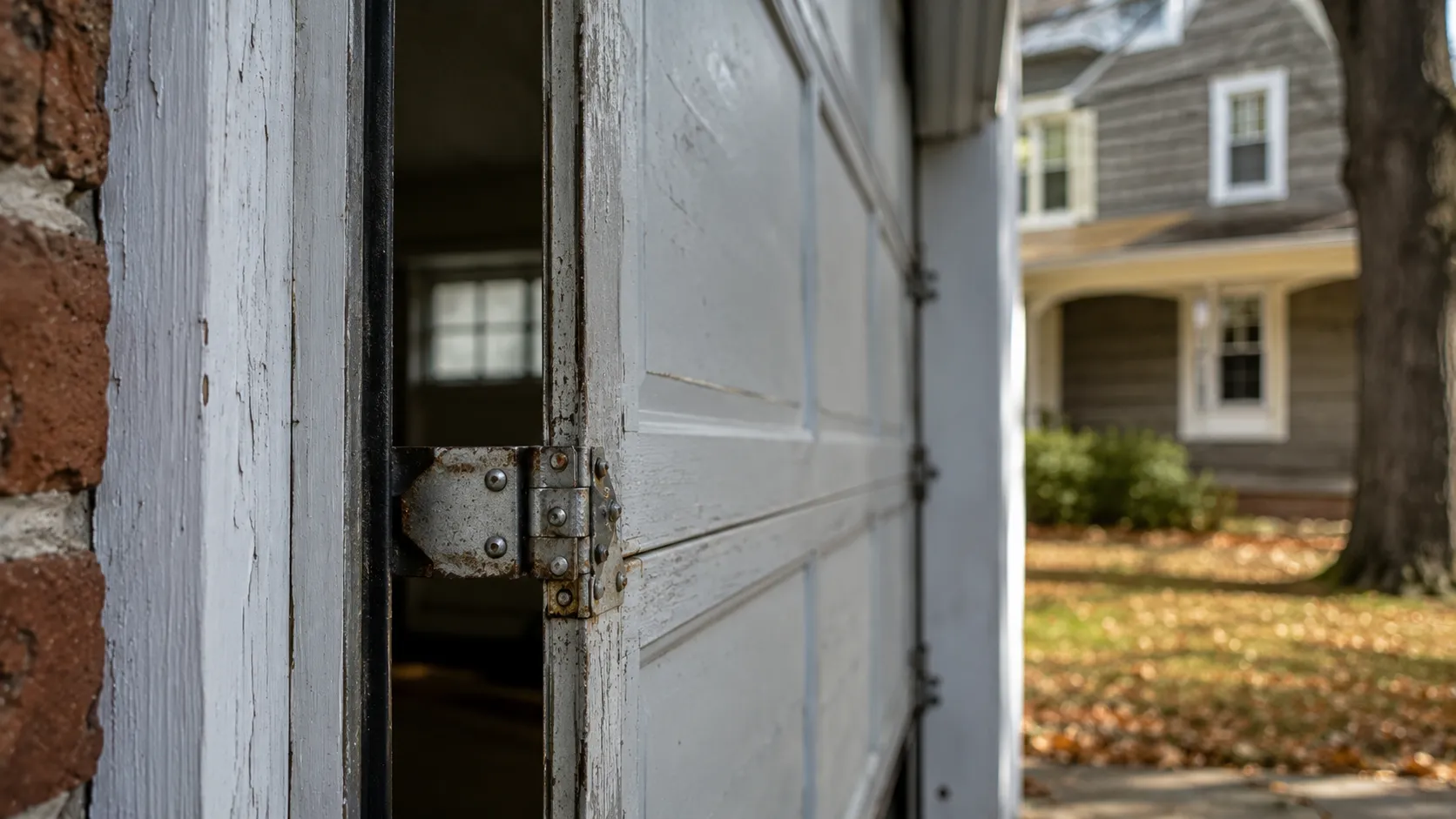
Wheaton's housing stock mostly went up between the 1960s and mid-1970s, with the full range running from 1938 to 2003 and a median build year of 1976. That matters because a door from that era was likely sized and sprung for a lighter, single-layer steel panel - not the heavier insulated door that may have replaced it since. Start with the spring: is it the original torsion size, or has it been swapped for something that doesn't quite match the door's weight? Check the cable for fraying at the drum, the rollers for flat spots or rust pitting, and the bottom panel for the kind of corrosion that comes from decades of contact with a concrete slab.
On a door this old, hardware wear rarely shows up as one obvious failure - it shows up as three small ones happening close together. If you're finding a worn cable, a noisy roller, and a spring that looks stretched all in the same visit, that's not bad luck. That's a door telling you it's near the end of what hardware repair can do for it.
The area
What the Weather Here Does to It
Wheaton sits in a cold, moderate winter climate, and that's harder on a torsion spring than most owners realize. It's not the cold itself that kills the spring - it's the repeated freeze-thaw cycling, which fatigues the steel's temper faster than steady use in a mild climate would. A spring rated for a certain number of cycles gets there quicker when the metal is contracting and expanding through winter swings. Weatherstripping on an older door also hardens and cracks in the cold, which lets in the draft that then makes the opener work harder to seat the door fully.
None of this shows up overnight. It shows up as a spring that snapped a few years earlier than you expected, or an opener that's straining on the last six inches of travel every cold morning. If your door is already near the original hardware's rated life and it's been through a few Wheaton winters on top of that, the weather has already spent some of the margin you thought you had left.
What we find
When Waiting Is Fine
Not everything needs a truck out that week. A door that's cosmetically dented but still tracks straight, opens quietly, and closes flush can wait - schedule it for whenever it's convenient, not as an emergency. Same with a slightly noisy roller that hasn't gotten worse over a few weeks; lubrication and a scheduled visit is fine. Where it stops being fine: a spring that's visibly gapped or twisted, a cable strand that's fraying, or a door that's started dropping unevenly on one side.
Those don't improve with time, and on a door built to 1970s-era spring specs, waiting usually means the failure happens at a worse moment - cold, at night, with the car half in the garage. One honest limit here: we don't stock every obsolete hardware size for every housing vintage in the county, and something that's genuinely unusual for a 1938-era build may take longer to source than a same-week fix. That's worth knowing before you assume any repair is a quick one.
How we work
What Is Going On
With a median household income of $97,861 in the Wheaton area, most owners we talk to can actually weigh a full replacement against another round of patching instead of just deferring the decision. That's the real question once a door is past a certain point: not "can this be fixed" but "is fixing it again the best use of the money." A door that's had its spring replaced once already, is showing rust through the bottom panel, and still has the original 1970s-spec track is a door where a third repair often costs close to what a new door would, minus the parts still failing.
If you're anywhere between Glen Ellyn two miles east and Winfield three miles west, the same 1976-median housing wave applies to your street, so this isn't a Wheaton-only pattern - it's the age of the neighborhood catching up with the hardware. Reach out through the site and we'll look at the door itself before recommending either path.
Questions
Common questions
How do I know if my garage door spring is original to the house?
If your house falls in Wheaton's common build range of the 1960s through mid-70s and the spring has never been serviced, there's a good chance it's original or close to it. Look for a manufacture stamp or a service sticker from a prior repair. A spring with no sticker and visible wear on a house from that era is usually due, or overdue.
Does cold weather actually shorten spring life here?
Yes. Wheaton's cold winter climate puts steel torsion springs through more freeze-thaw cycling than a mild climate would, and that cycling fatigues the metal faster than calendar age alone. A spring rated for a set number of open-close cycles reaches that limit sooner when it's also flexing through winter temperature swings.
Is it ever too late to just repair the door?
When you're stacking a third repair on a door that's already had a spring and a cable replaced, and the panel itself is rusting through, the repair cost starts closing in on replacement cost while the remaining parts keep failing. At that point a new door is usually the better math, not just the easier one.
What don't you handle same-week?
Genuinely obsolete hardware sizes from the older end of the area's build range, 1938 into the early 1950s, can take longer to source than a standard repair. We'll tell you up front if that's the situation rather than guess at a timeline.
Ready when you are
Need a garage door sorted in Wheaton?
Wheaton Garage Door Pros repairs and installs garage doors, springs and openers in Wheaton, IL and the surrounding area.