
Guide
What an Older Garage Door Is Worth Fixing in Wheaton
Most Wheaton houses date to the 1960s and 70s, with some as old as 1938. Here's what to check before you replace a door that still has real life left in it.
Local detail
What to Check
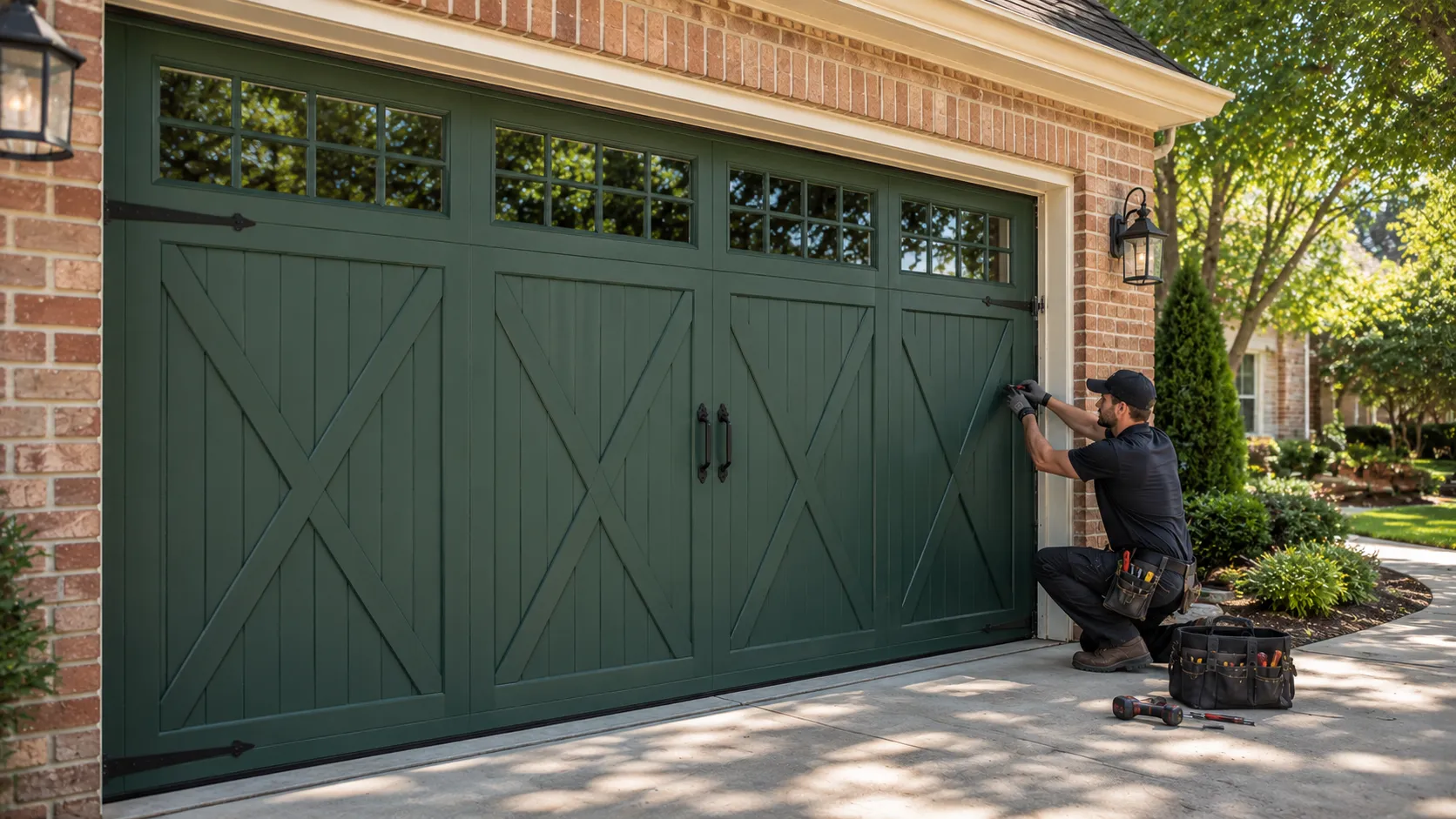
Start with the hardware, not the panel. A lot of the housing stock around Wheaton went up between 1938 and 2003, with the heaviest concentration from the 1960s and 70s. Doors on those builds are usually steel, either flush or a light ribbed panel, hung on torsion springs mounted above the opening rather than the older side-mount extension setups you sometimes find on the pre-1960s houses.
If your door is original to a 1960s or 70s build, check the spring cone bolts for rust bleed, check the bottom bracket for hairline cracks, and run your hand along the track for pitting. None of that means the door is done. A torsion spring on a properly sized shaft can outlast two openers.
What kills these doors early is usually a cheap roller that's chewed up the track, not the door itself. If the panel is straight and the track lines are clean, you're looking at a repair job, not a replacement. If the bottom two feet of the panel are rusted through from years against a slab that holds moisture, that's a different conversation.
The area
What the Weather Here Does to It
This area sits in a cold, moderate climate band, meaning real winter cold but not the extreme swings that crack steel or split wood outright. What it does instead is slow. Cold makes torsion springs stiffer and openers work harder to lift a door that's already heavier than it was in July, since grease thickens and lubricant migrates off the rollers.
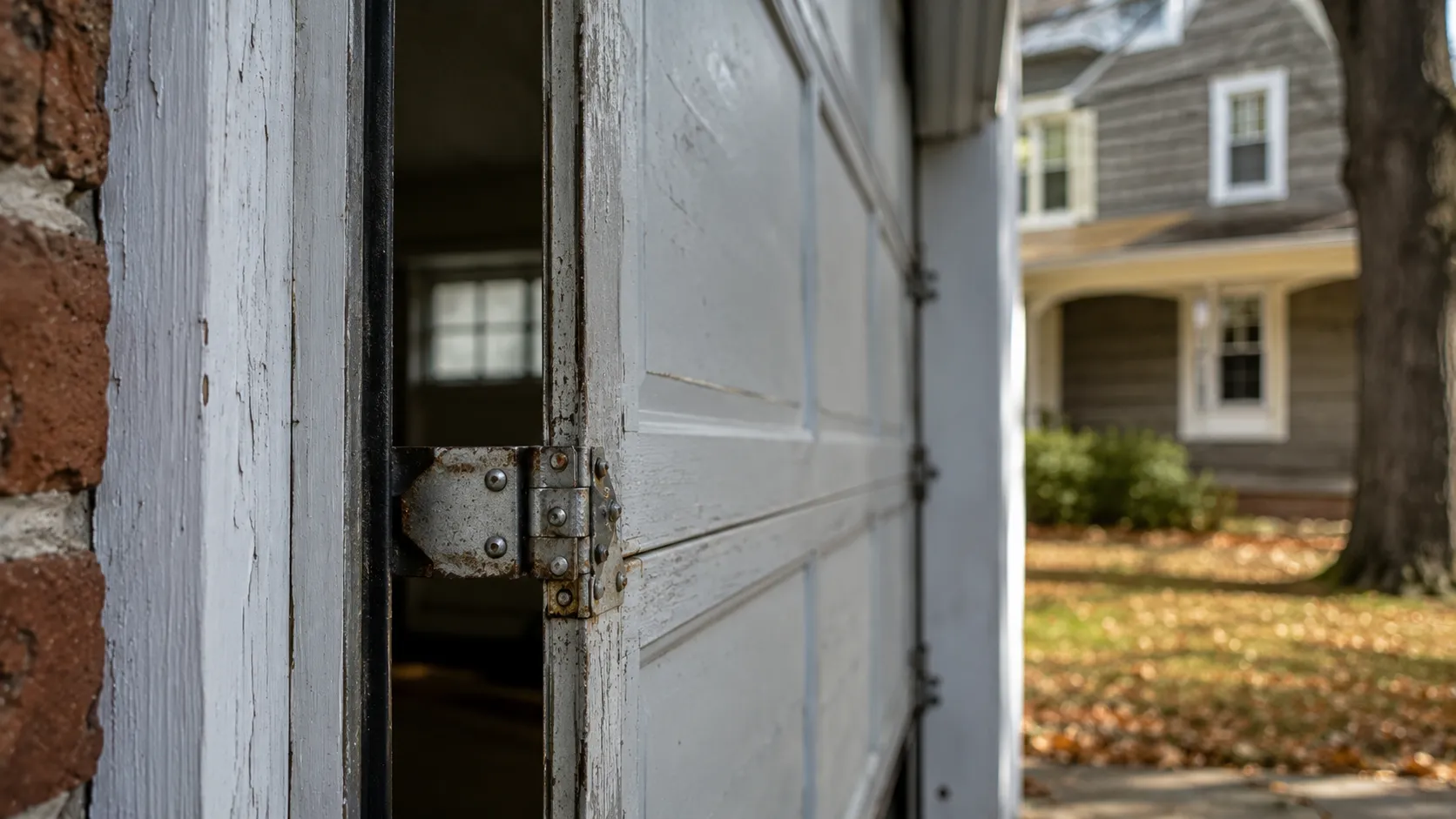
On an older door, that added strain shows up first at the weakest point: a spring near the end of its cycle count, or a hinge that was already loose. You'll hear it before you see it, usually a grinding or a hesitation partway up. None of this is dramatic weather damage.
It's slow wear that a cold winter speeds up on a door that was already due for attention. A door that's been fine for years can start acting up the first hard cold spell simply because the margin it was running on finally ran out.
What we find
When Waiting Is Fine
Not every noise or stiff hinge needs a truck out that day. If the door still opens and closes on command, seals at the bottom, and the noise is a squeak rather than a grind, you can wait and get it looked at on a normal schedule. I'll say plainly: we don't chase every rattle. A worn roller that's still rolling is a maintenance item, not an emergency.
Where I'd push you not to wait is a spring that's visibly stretched or gapped, or a door that drops fast on the way down instead of easing - that's a spring or cable losing its grip on a heavy panel, and that can hurt someone. Given the median household income in this area sits well above the regional norm, a lot of owners default to replacing rather than fixing, which isn't always the better call. A well-maintained torsion setup from a 1970s build can run another decade with the right spring swap.
How we work
What Is Going On
Most of the calls on older Wheaton-area doors trace back to the same thing: a door built for a house from the 1960s or 70s that's now on its second or third opener, but still running the original spring and track hardware. Springs have a rated cycle count, and a door that's fifty-some years old has usually burned through more than one spring already, whether or not the owner remembers replacing it. The panel itself, if it's steel and hasn't taken a hit, often outlasts several rounds of hardware underneath it.
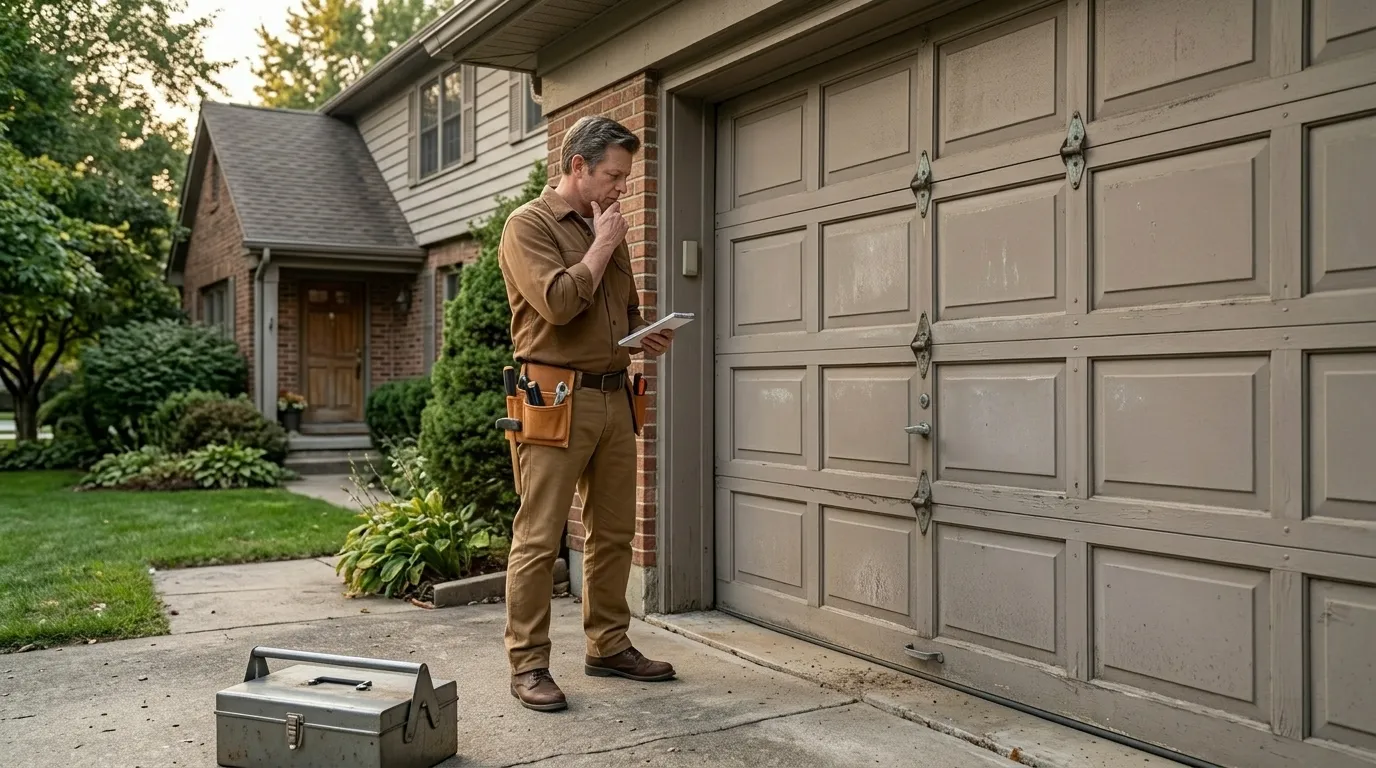
What actually decides whether a door is worth fixing is the track alignment and the spring condition, not the age printed on a permit. A straight panel on bent track wastes money on cosmetic fixes. A dented panel on solid, properly tensioned hardware is often cheaper to fix than to replace outright.
Questions
Common questions
How do I know if my garage door spring is original to the house?
You usually can't tell from looking, but if the house was built in the 1960s or 70s and nobody remembers a spring job, it's likely been replaced at least once already since springs have a rated cycle life. Rust on the cone bolts or a visibly stretched coil is a better clue than the build year alone.
Is it worth fixing a door on a house built before 1960?
Often yes. Steel panels from that era hold up well if they haven't rusted through at the bottom edge, and the hardware underneath is what usually fails first. A spring and roller swap on a straight panel is almost always cheaper than a full replacement.
Does cold weather actually damage garage door parts?
Cold doesn't crack steel doors in this climate band, but it stiffens springs and thickens lubricant, which puts more strain on hardware that was already near the end of its life. A door that struggles in a cold spell was usually already due for attention.
Why does my older door drop fast instead of easing down?
That's almost always a spring or cable that's lost tension or slipped, not the opener. It's the one issue on this list I wouldn't wait on, since a heavy panel dropping unsupported can injure someone standing under it.
Ready when you are
Need a garage door sorted in Wheaton?
Wheaton Garage Door Pros repairs and installs garage doors, springs and openers in Wheaton, IL and the surrounding area.